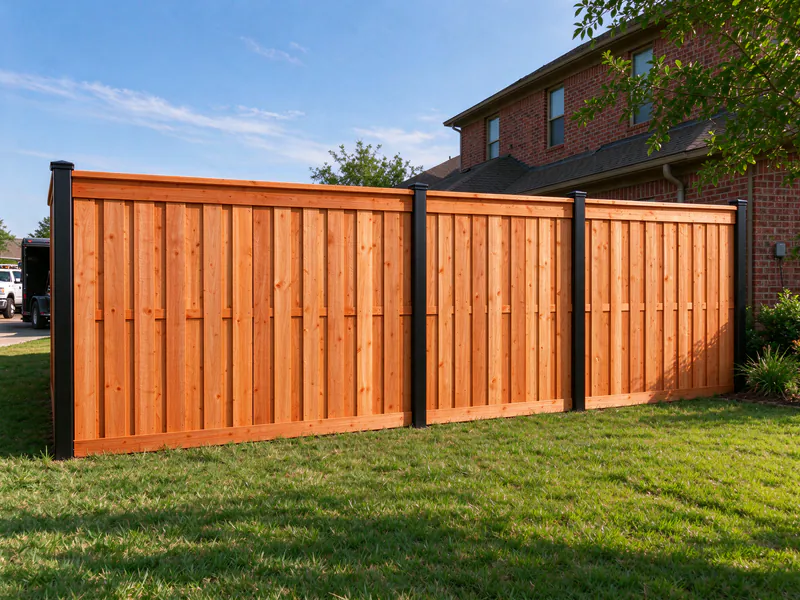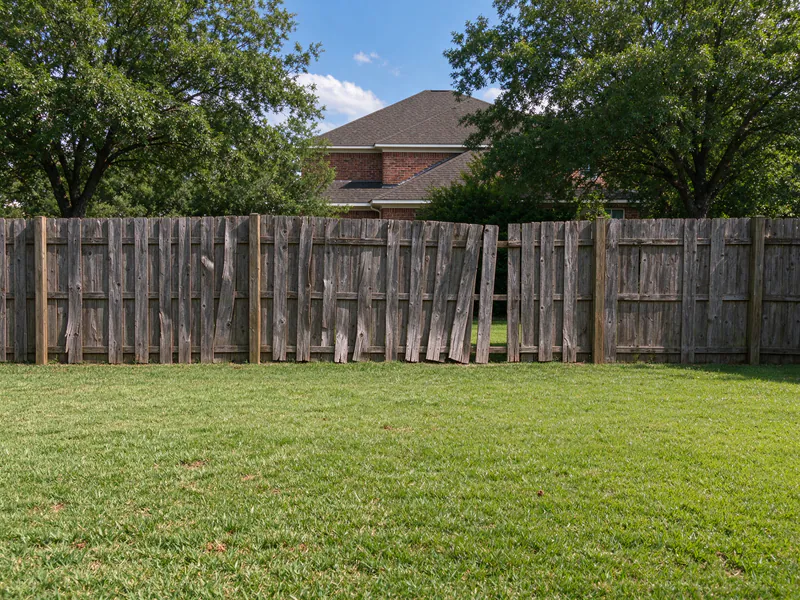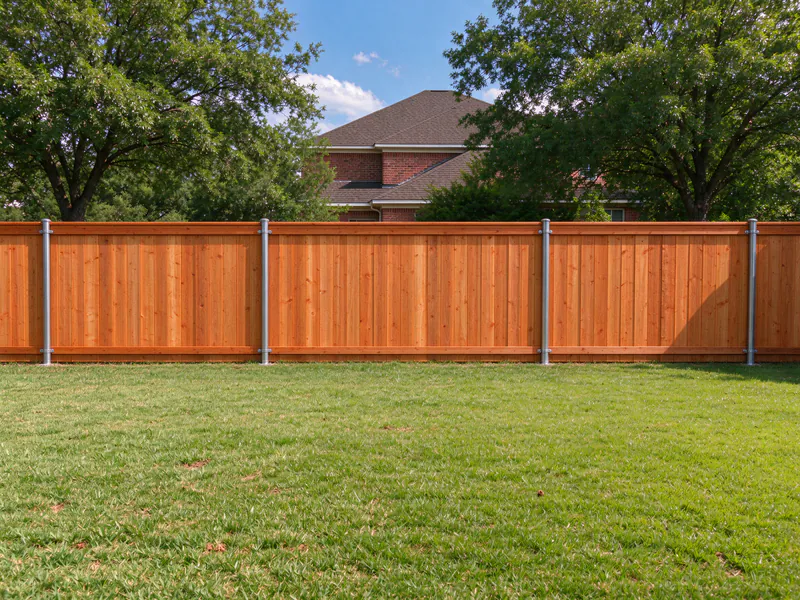
Garth Allen Fence Builders arranges fence replacement for Allen homeowners whose old fence has reached the point where fixing it piecemeal no longer makes sense. In most Allen subdivisions that means a cedar fence on wood posts, now leaning in two or three directions, with soft post bases and boards that have cupped or split. The old fence comes out completely, footings included, and a new one goes in on galvanized steel posts the way the City of Allen now requires. The work is done by insured fence contractors registered with the City of Allen. If you are unsure whether your fence has reached that point, start with repair or replace or the repair-or-replace check.
When a fence is past repair
A single rotted post or a run of loose pickets is a repair. Replacement makes sense when the failure is spread through the whole system. The signs that point that way are consistent: most posts move when pushed, the rot line at the ground is soft on post after post, the rails have pulled away from their fasteners, and earlier repairs have started to fail beside newer ones.
Age matters too. Wood posts in Allen sit in soil that stays damp under sprinklers and in a code zone the city rates “Very Heavy” for termites, so the part of the post just below grade is where decay starts. Once several posts have lost strength there, the fence is only as stiff as its weakest neighbors, and a windy spring tends to lay a whole section over at once. The cedar fence lifespan guide explains why the posts usually give out long before the pickets.
Why the new fence is built on steel
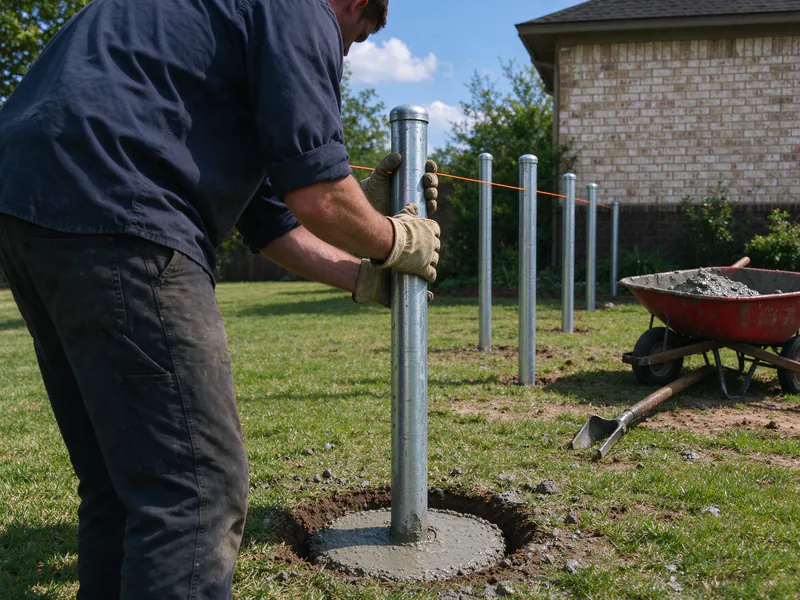
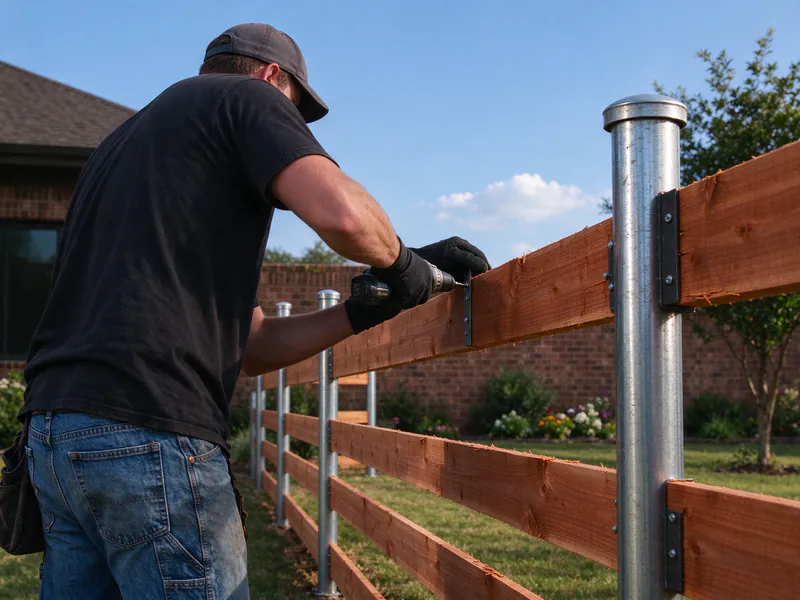
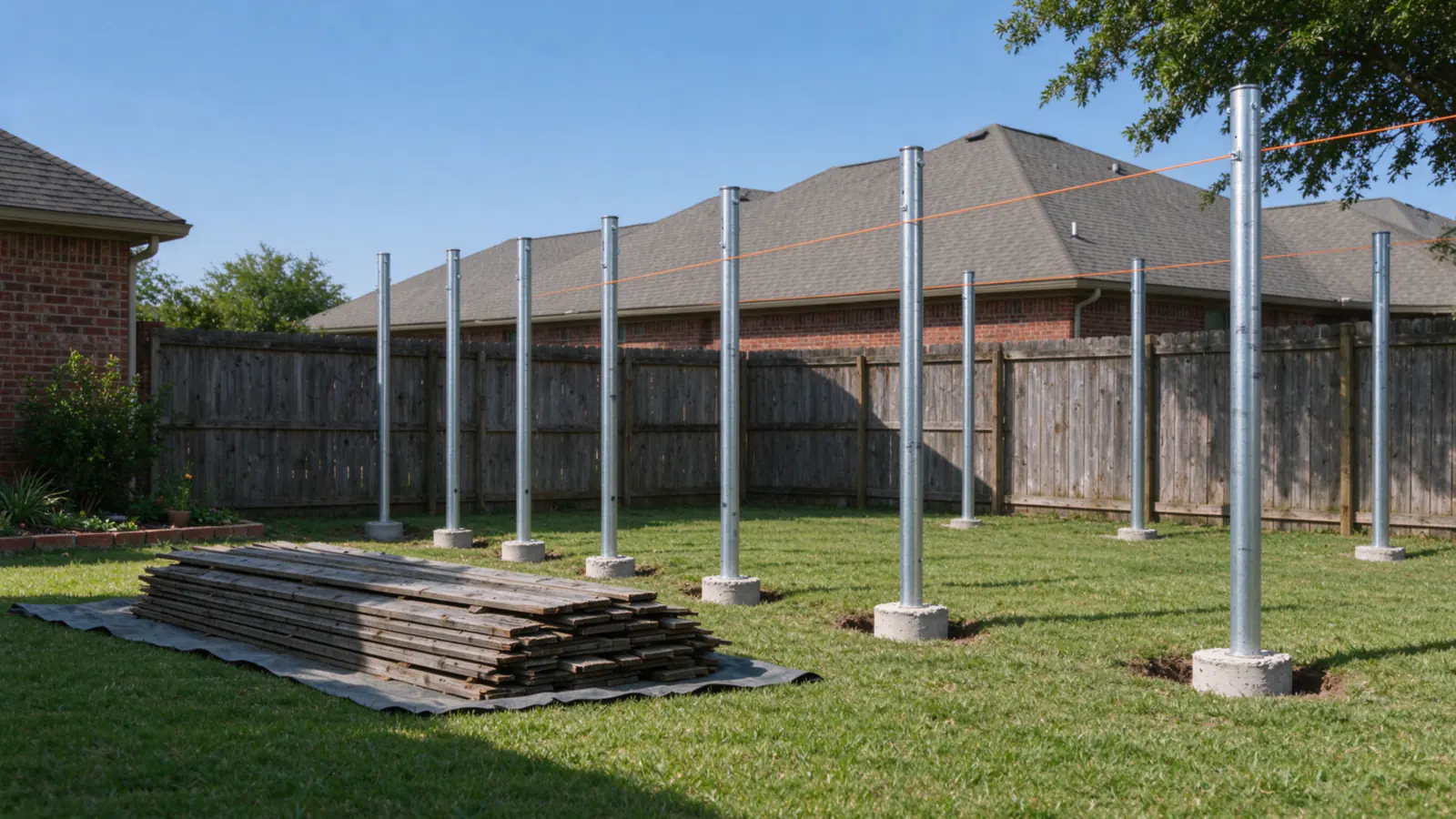
Allen’s Residential Fence Guideline requires metal posts on all fencing, along with metal caps and hardware. That changes what a replacement is. Replacing old wood posts with new wood posts is not an option inside the city, so even a homeowner who wants the fence to look the same will get steel under it. Cedar pickets and rails attach to the steel with brackets, or the posts can be wrapped in cedar for a traditional face. The steel vs wood posts guide compares the finishing options.
The steel also answers the reason the old fence failed. Galvanized posts set in concrete do not rot at the ground line and do not feed termites, and they stay straight while cedar shrinks and swells around them. Posts go at least 18 inches deep in concrete, with gate posts and taller fences set deeper.
Tear-out, footings and the old line
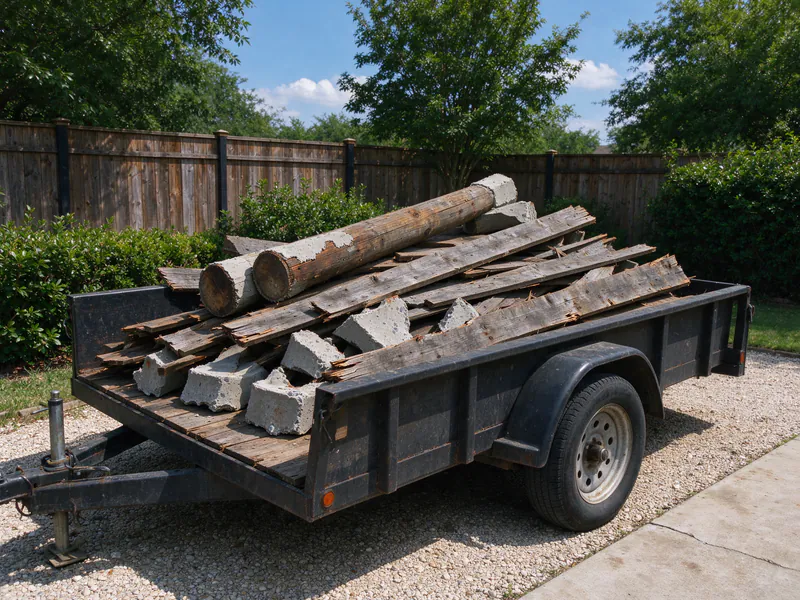
Demolition is where replacement differs most from a new fence. Pickets and rails come off first, then each post is pulled with its concrete collar. Old footings are often shallow, mushroom-shaped and cracked from years of clay movement, and they cannot be left in place, because the new posts usually land near the same spacing. Typical DFW-area pricing for tear-out and haul-away runs $3 to $8 a foot, depending on the fence height, how much concrete is attached and how far the debris has to be carried to the alley or driveway.
Before any digging, Texas811 locates are called in, as the City of Allen’s permit FAQ directs. Irrigation lines are flagged separately, since they are private and do not show up in a utility locate.
Getting the line right this time
Replacement is the one chance to correct where the fence sits. Allen requires fences to be on private property and not cross the property line, and an old fence is not evidence of where that line is: a line can drift with years of repairs, and some were set by eye. Where the corners are uncertain, the survey from closing or the recorded plat is checked before layout. The property line guide covers shared fences and what neighbors typically agree on.
The drainage easement along the back and side lot lines is the other line to respect. Inside that standard 3-ft strip, the bottom of the new fence must sit at least 3 inches above finished grade so storm water can pass. Many older fences had a rot board buried in the soil there; the replacement drops it on that stretch. Corner lots and lots beside an alley also have a sight triangle where a fence cannot block drivers’ view, which can mean clipping the corner the old fence used to fill.
Permit and HOA order
Replacement fences need a City of Allen permit, filed through the Citizen Self-Service portal with a $75 fee, and the job is inspected. The city asks owners to clear any HOA requirements first, so the sequence is HOA approval, then permit, then demolition. An HOA may specify the style, the height, which side faces out and the stain color, and changing any of those during a replacement can trigger a new review. The Allen permit rules guide lists what the application needs.
What a replacement costs
The bill has two parts: removing the old fence and building the new one. Tear-out is the $3 to $8 a foot above. The new fence is priced like any installation: typical DFW-area figures run $35 to $50 a foot for 6 ft cedar board-on-board and $18 to $35 for side-by-side, with 8 ft adding roughly 25 to 40 percent. Gates, slope and access through a side yard move the number from there. The Allen fence cost guide and the fence cost estimator help build a budget.
Dogs, pools and the open yard
A replacement leaves the yard open between the day the old fence comes down and the day the new pickets go up, because the posts are set first and the concrete has to cure before rails carry any load. For a household with a dog, that gap is the part to plan around, whether with a temporary run, a stay with family or a sequence that keeps one side standing while another is rebuilt. The fences for dogs guide covers diggers and climbers once the new fence is up.
A pool changes the stakes. Allen requires a pool to be enclosed by a barrier at least 4 ft high with self-closing, self-latching gates, and tearing out the fence that forms part of that barrier removes it. The safest order keeps the pool side standing, or fenced off temporarily, until the new section and its gate are in place and latching. Pool fence installation explains the gate and latch details.
Choosing the new fence
Most owners rebuild in cedar, covered on the wood fence installation page. Some switch the front or pool side to ornamental iron, which suits open sightlines and does not hold back wind the way solid boards do. Replacement is also the time to add a wider gate for a mower or trailer; see gate installation for sizes and hinge posts.