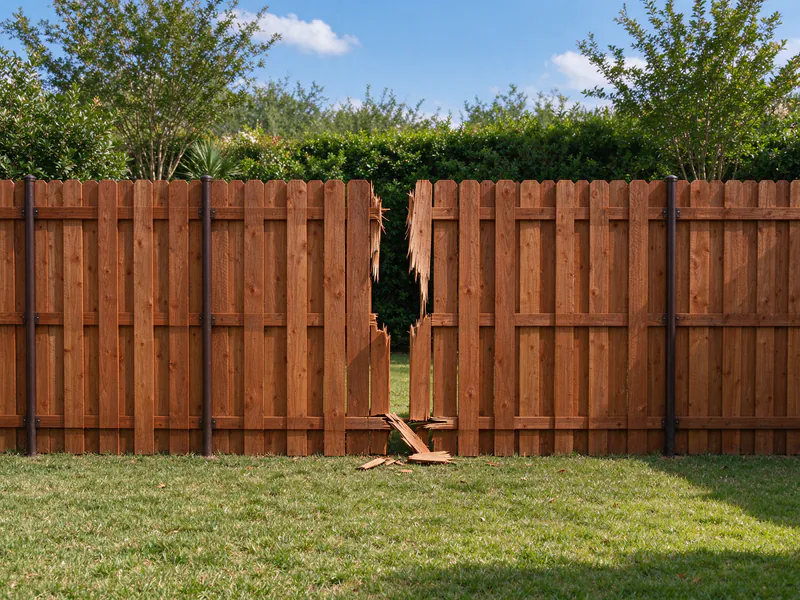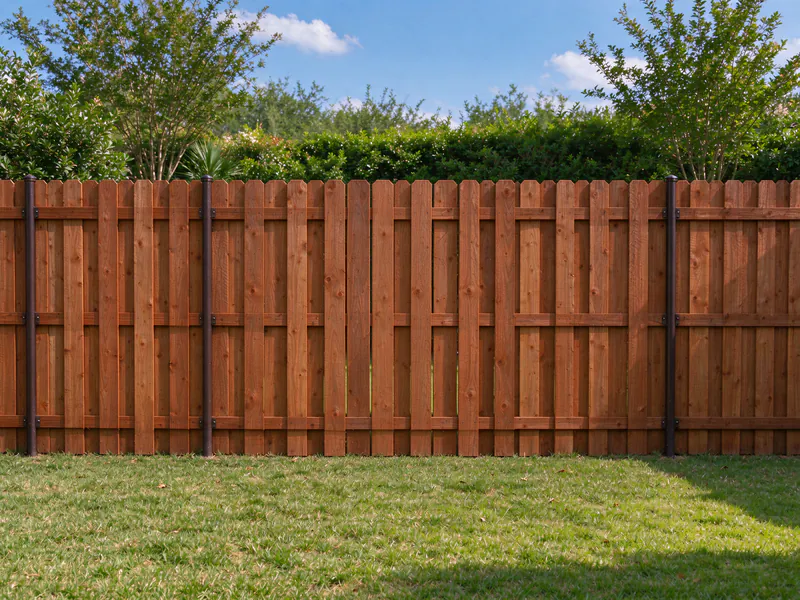
Garth Allen Fence Builders arranges fence repair in Allen for the problems that show up on almost every older backyard fence: a section that leans toward the neighbor, posts snapped at the ground after a storm, rails that have let go of their pickets and a gate that no longer reaches its latch. Each repair starts by working out why the part failed, because a post reset in the same weak spot fails the same way. Repairs are carried out by insured fence contractors registered with the City of Allen. When the damage is widespread, the repair-or-replace check helps decide whether a repair is still worth it.
Start with the post, not the boards
Pickets get blamed, but a fence leans because something at the base has given way. There are two common versions. In the first, an old wood post has rotted through just below the soil line, so it breaks or bends at grade while its concrete stays put. In the second, the post is sound but the whole footing has tipped, because it was shallow, flared at the top or set in soil that moves.
Telling them apart takes a look at ground level. A post that wobbles above a footing that does not move points to rot. A post and footing that move together point to soil and depth. Steel posts can lean too, almost always for the second reason, and that changes the fix from a new post to a deeper footing. The clay soil guide explains the soil side of it.
Why Allen soil keeps pushing posts
Federal soil surveys put most of Allen on Houston Black clay, which swells when wet and shrinks and cracks as it dries, with a shrink-swell rating in the very high class. A footing in that soil is squeezed and lifted in a wet spring and left in a loose, cracked collar by August. Over a few cycles a post walks out of plumb, and posts near downspouts, sprinkler heads or low spots move most because their soil swings furthest between wet and dry.
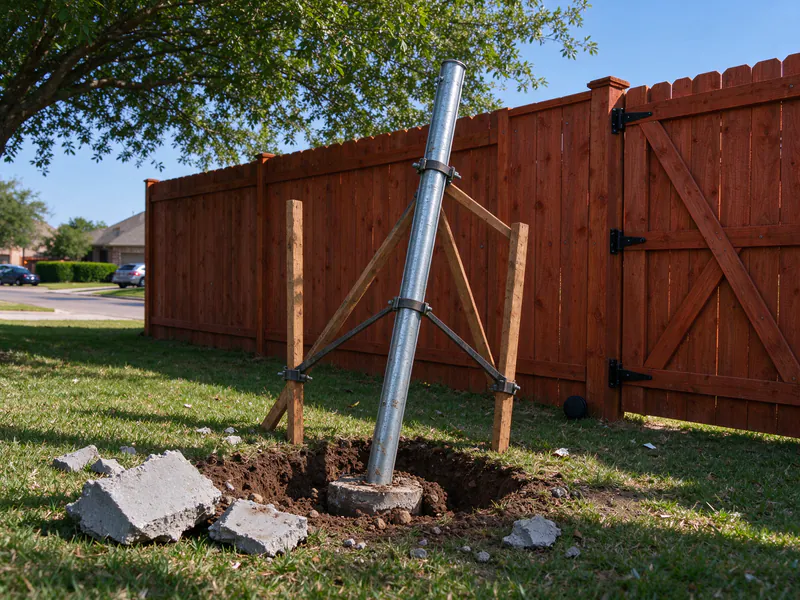
That is why a lasting repair pays attention to the hole as much as the post. A replacement footing is dug straight-sided, at least 18 inches deep as the City of Allen requires, deeper for gate posts and taller fences, and its concrete is crowned so water runs off rather than collecting against the post.
Replacing a post in an older wood fence
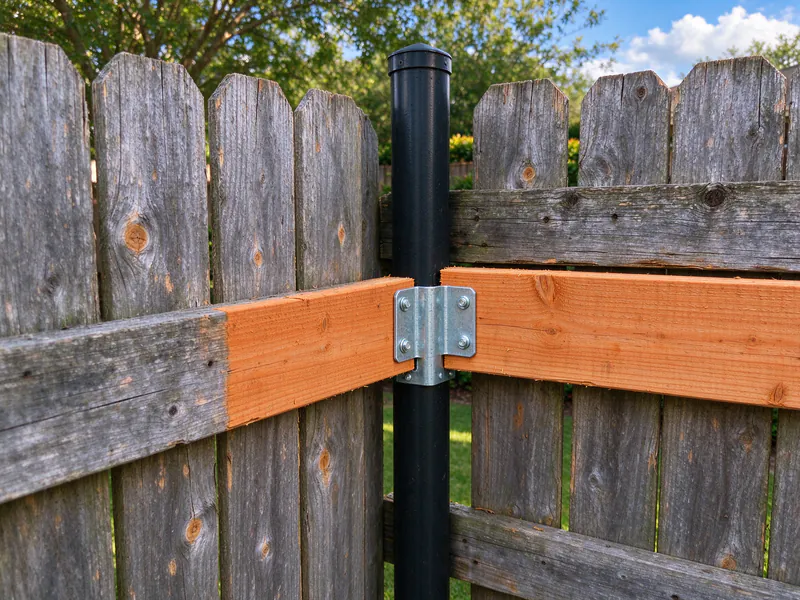
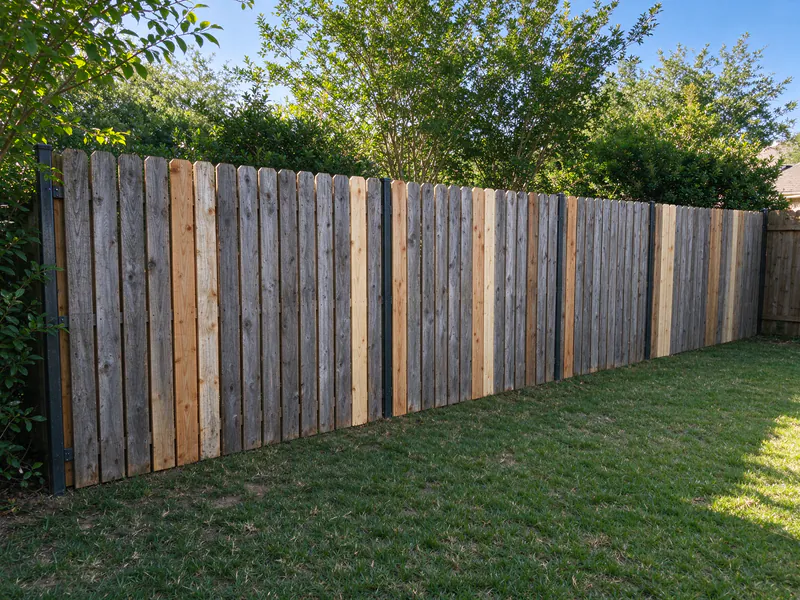
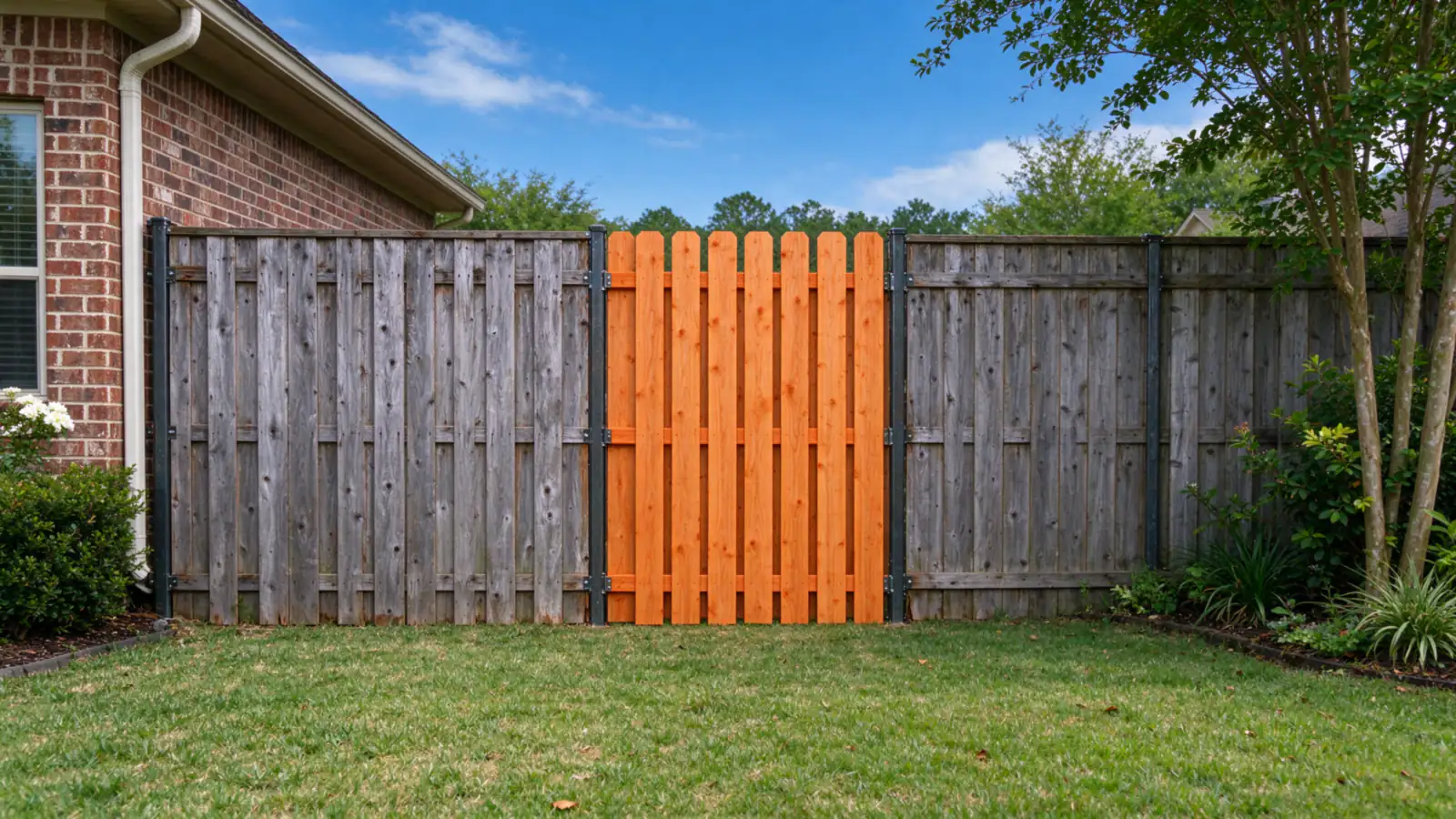
Most fences needing repair in Allen were built on wood posts before steel became the expected standard. The City of Allen guideline now requires metal posts on all fencing, so a failed post is replaced with galvanized steel rather than another piece of wood. The section is braced, the old post and its concrete are pulled, and the new steel post is set in fresh concrete. Once it cures, the existing rails are fastened to it with steel brackets, so the cedar face looks much as it did. The steel vs wood posts guide shows how those brackets work.
The posts on each side get checked at the same time. In a city whose code rates termite pressure “Very Heavy,” a post that rotted at grade usually has neighbors of the same age in the same soil, and a quick probe tells whether they will be next.
Rails, pickets and boards
Rails fail at their ends, where nails or screws have rusted or the wood has split around them. Re-nailing into the same holes rarely lasts. New exterior-rated brackets and fasteners give the rail fresh wood to grip, and a rail that is soft at the ends is replaced outright.
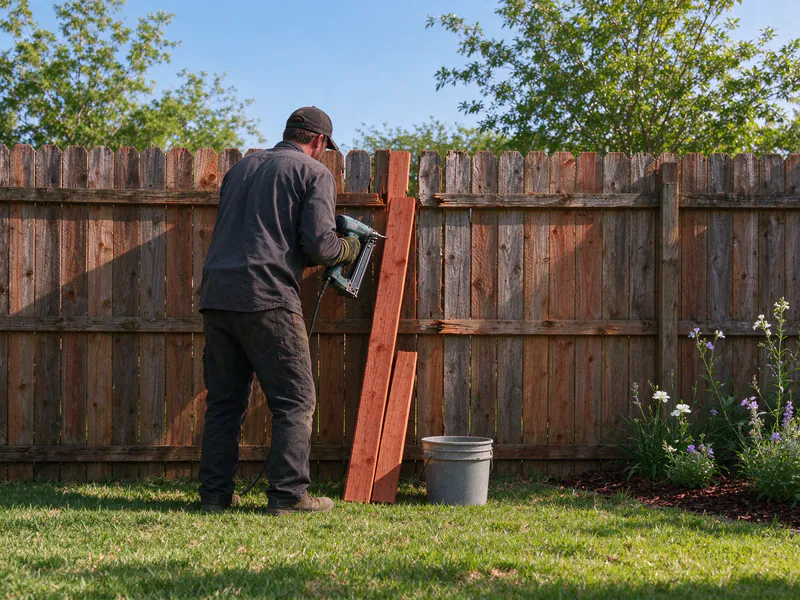
Pickets fail one at a time and come off one at a time. Splits, cupping and warping come from cedar drying fast on its sunny face; the warping and splitting guide explains the causes. Replacement pickets are cedar and will look brighter than the old wood until they weather or the fence is stained, which is where fence staining helps blend old and new.
Along the drainage easement on back and side lot lines, Allen asks for the bottom of the fence to sit at least 3 inches above grade. A repair on that stretch keeps the gap rather than adding a ground-contact board that would block water and rot.
Storm damage and gates
North Texas storms put real load on solid fences; Allen’s building code designs for a 105 mph gust, and a 6 ft wall of cedar catches all of it. After a blow-down, the question is whether the posts snapped at grade (common with old wood), the footings rotated in wet soil, or panels simply tore off sound posts. Each needs a different repair. The storm damage guide covers what to do in the first days after the wind drops.
A gate that drags or misses its latch is usually a leaning hinge post, a racked gate frame or both. Tightening the hinges treats the symptom. Resetting the post deeper or adding a steel frame treats the cause; see why gates sag and gate installation.
Iron and steel fences
Ornamental iron fails differently from cedar. Rust starts where water sits: at the base of a post where soil or mulch touches the metal, inside hollow pickets that were never capped, and at welds where the paint cracked. A post rusted through at grade can be cut out and replaced or sleeved, depending on how far the corrosion has spread along the panel. Surface rust on pickets and rails is wire-brushed, primed and repainted before it pits deeper. Panels bent by a falling limb or a car are straightened or swapped section by section. The rusted iron fence guide explains how to judge whether a run is still worth saving, and iron fence installation covers new runs.
Permits and when repair stops making sense
Permit rules for repairs depend on the city. Murphy requires a repair permit when 15 linear feet or more, or five or more posts, are replaced, and does not allow a fence to lean more than 20 degrees. Allen’s residential exemption list has no fence exemption, so larger repairs there are worth confirming with the city first; the permit rules guide has the basics.
Repairs stop making sense when most posts are loose or soft, earlier fixes are failing next to new ones, and the pickets are near the end of their life too. At that point the cost of chasing failures post by post overtakes a rebuild, and fence replacement on steel posts is the better use of the money. The repair or replace guide compares the two in detail.