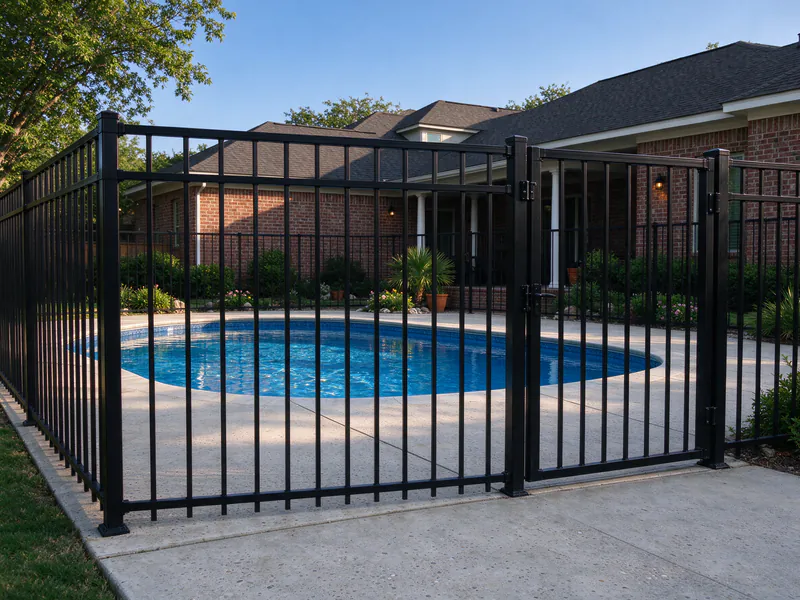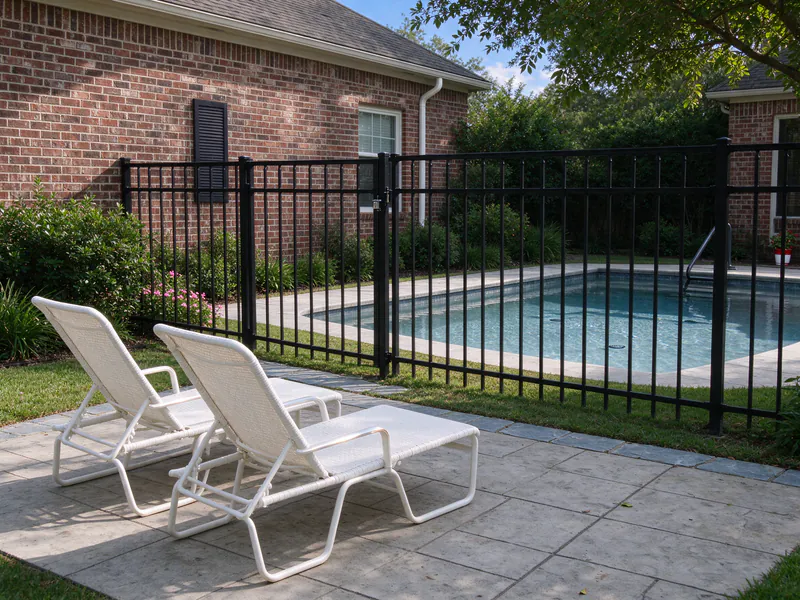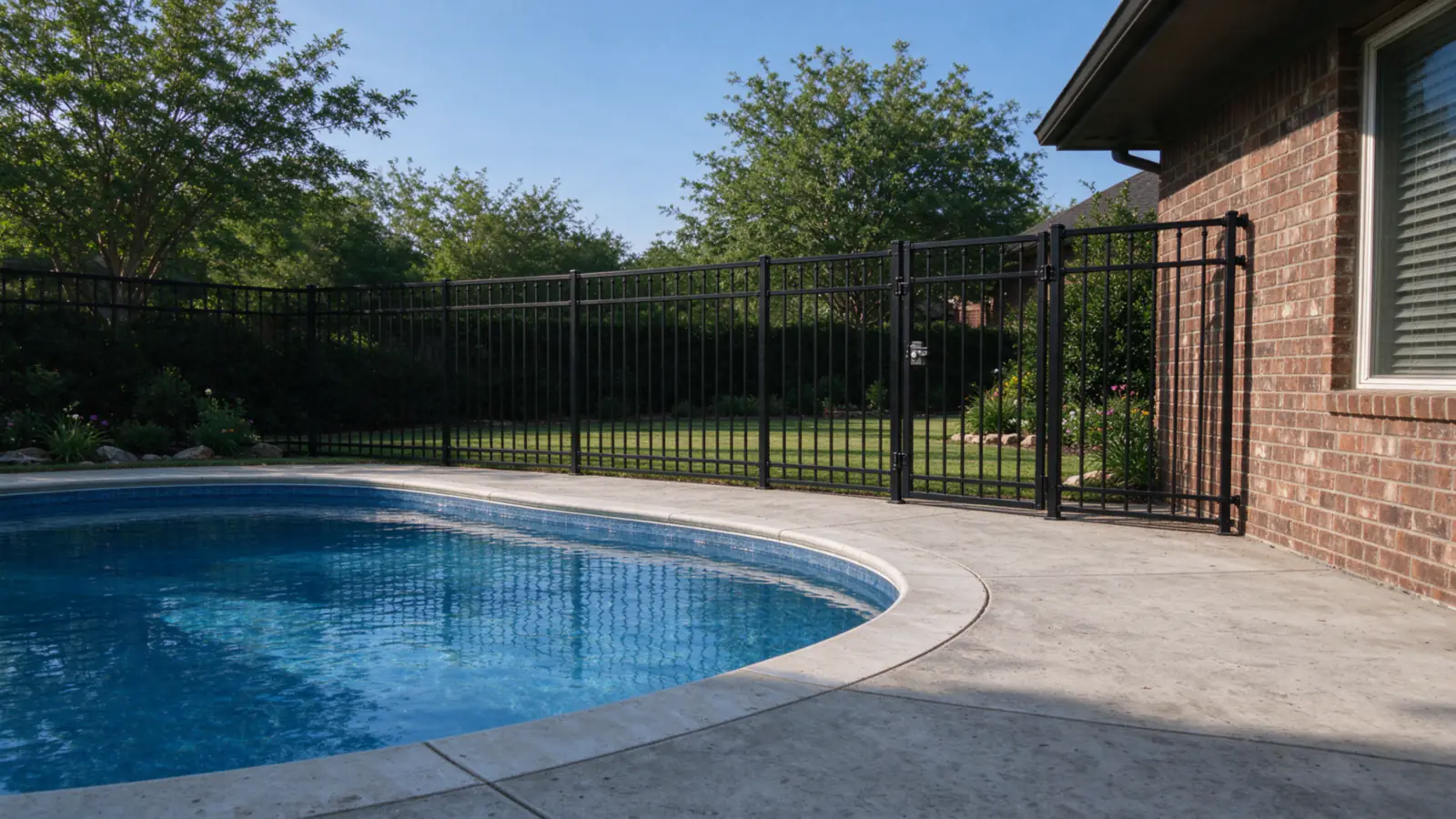
Garth Allen Fence Builders builds pool fences and pool gates in Allen and the surrounding Collin County cities, either as an iron or ornamental steel fence around the water or by bringing an existing backyard fence and its gates up to what a pool barrier needs. The work is done by insured fence contractors registered with the City of Allen. A pool barrier is judged by the City against written rules, so this page sticks to what those rules say and why each one exists; final approval comes from the City’s inspection, not from the fence builder.
What Allen asks of a pool barrier
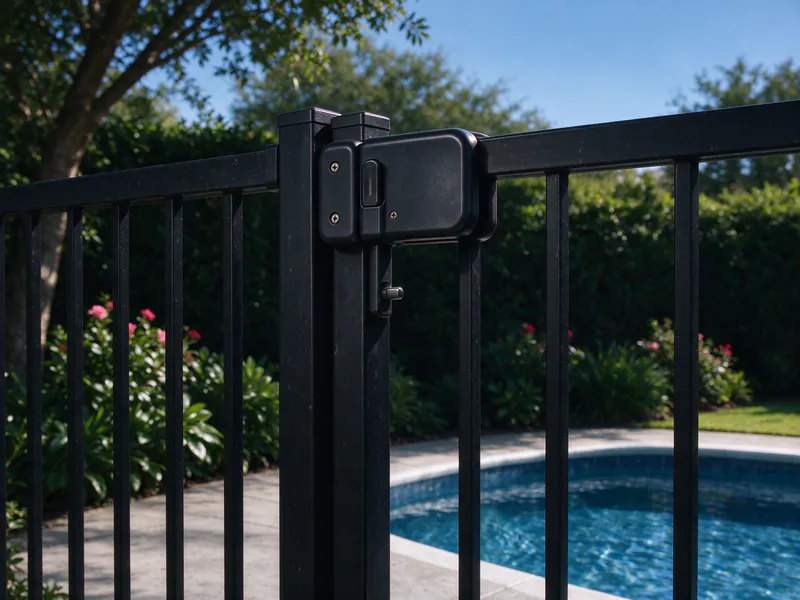
Two City of Allen documents apply. The Residential Fence Guideline says a pool or hot tub enclosure must be at least 4 ft tall, with self-closing and self-latching gates and the latch on the pool side at least 4.5 ft above the ground. The Residential Swimming Pool and Spa Guideline adds that the pool must be completely surrounded by a fence or wall at least 4 ft high, with self-closing, self-latching gates, and that house doors opening into the pool area need alarms meeting UL 2017.
Each rule closes a specific gap. Four feet is hard for a young child to climb. A gate that shuts and latches by itself does not rely on whoever walked through last. A latch on the inside, high up, cannot be reached by a child standing outside. Door alarms cover the barrier’s weakest point when the house wall is part of it. The general fence rules still apply as well: metal posts, the property line, and HOA approval before the permit, all covered in the Allen permit rules guide.
The gate is where most barriers fail
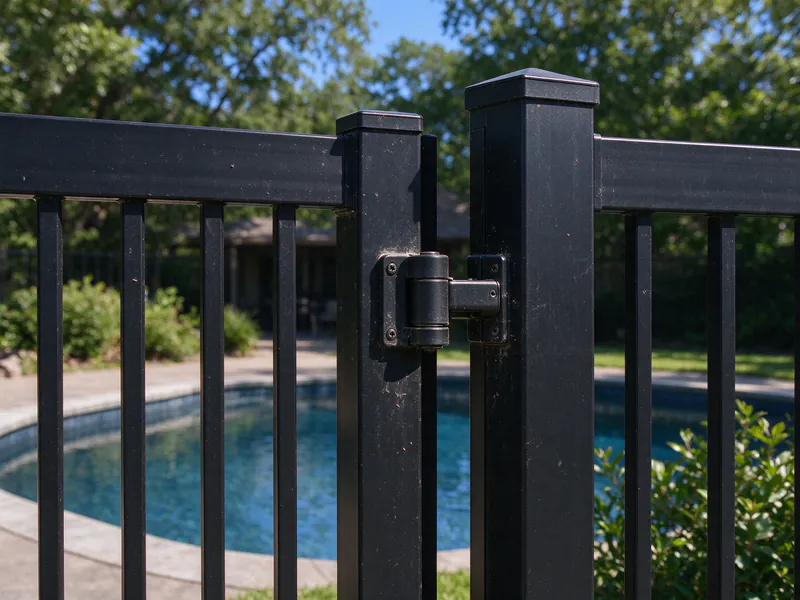
A pool fence is only as good as its gates. Self-closing hinges lose tension, a latch drifts out of line, or someone props the gate open for a party and forgets it. The federal Consumer Product Safety Commission’s barrier guidelines recommend that pool gates open outward, away from the pool, so a child pushing on a gate that has not quite latched pushes it shut rather than open.
In Allen there is a local reason gates drift: Houston Black clay. This very high shrink-swell soil lifts and drops footings with the seasons, and a gate post that moves a quarter inch is enough to stop a latch catching. Pool gate posts are therefore steel, set deeper than the City’s 18-inch minimum in straight-sided holes, and the hinge and latch hardware is adjustable so it can be brought back into line. The clay soil guide explains the soil movement, and the sagging gate guide covers what to check when a gate stops latching. A quick test every month or so, letting the gate swing shut from half open, catches drift early.
Using the backyard fence as the barrier
On many Allen lots the 6 ft cedar privacy fence around the backyard already encloses the pool, and the house forms the fourth side. That can work, but three things need checking.
First, every gate in that perimeter fence becomes a pool gate. The side-yard gate by the trash bins and the gate to the alley both need self-closing hinges and a latch on the inside at least 4.5 ft up, which usually means new hardware and sometimes a new gate frame stiff enough to close reliably. Second, the climbing side. A side-by-side cedar fence with its rails facing out offers a ladder; the CPSC guidelines treat horizontal members less than 45 inches apart as footholds and put them on the pool side. Board-on-board cedar, which looks the same on both faces, hides the rails behind pickets on both sides. Third, the house doors, which need UL 2017 alarms where they open into the pool area.
Allen requires metal posts on all fencing, so an older cedar fence still standing on wood posts is usually due for replacement before it is asked to serve as a barrier. Wood fence installation covers building a new one.
An inner fence around the pool
Many owners prefer a separate fence closer to the water, so the pool can be seen from the house and the rest of the yard stays open for dogs and play. Wrought iron is on Allen’s accepted list, and the options for iron-style panels are covered under iron fence installation. Picket spacing matters: the CPSC guidelines limit openings so a 4-inch sphere cannot pass, and decorative scrolls or rails low on the panel can give a small foot a step.
Aluminum is popular for pool fences elsewhere because it does not rust, but in Allen it falls outside the accepted materials list and needs Building Official approval first. The steel posts and concrete footings are the same either way. Where a dog shares the yard, the inner fence may also need to hold the dog, and the fences for dogs guide covers bottom gaps and jumpers.
Hot tubs and spas
The fence guideline puts hot tub enclosures under the same rule as pools: at least 4 ft, with gates that close and latch by themselves. A spa set into the corner of a patio inside an existing privacy fence is often already enclosed on two sides, so the question becomes the open sides facing the house and the yard. A short run of iron with a self-closing gate can finish the enclosure without walling off the patio. Where the spa sits right against the house, the doors that open toward it are part of the picture, the same as with a pool, and the alarm rule for those doors is worth confirming with the City before the layout is final.
Fencing around a new pool build
A pool build and a fence share the same backyard and often the same months. Pool equipment usually needs a wide opening for access, so the permanent barrier and gates often go in after the heavy work is done. The order of work, how the yard is secured in the meantime, and who schedules which inspection are worth settling with the pool builder at the start. The new pool fence planning post goes through that sequence, and gate installation covers the gates themselves.
What decides the price
Pool barriers are priced by configuration rather than a per-foot rule of thumb. The main drivers are the length of the barrier, the material (cedar on steel posts, ornamental steel or wrought iron), how many gates need self-closing hinges and high latches, whether existing perimeter gates need new frames, and how much of an older fence has to be replaced to carry the barrier. The fence cost estimator gives a starting point for the fence itself.