Garth Allen Fence Builders arranges gate installation for Allen homes: single walk gates to the side yard, double drive gates for a boat or trailer, alley gates on rear-entry lots and pool gates that have to close and latch every time. A gate is the only part of a fence that moves, and it puts a twisting load on one post every time it opens, so most of the work goes into the posts and the frame rather than the boards. Gates are installed by insured fence contractors registered with the City of Allen, either as part of a new wood fence or replacement, or on their own in an existing fence.
Why gates sag
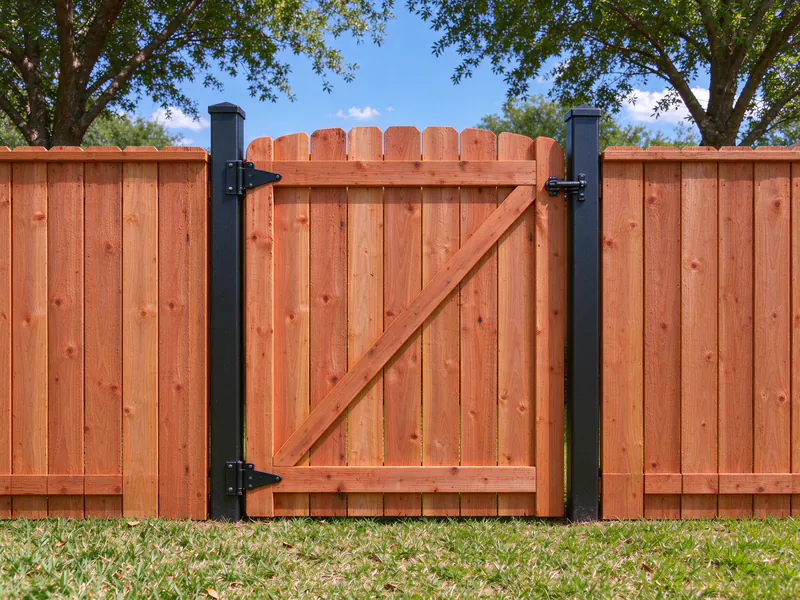
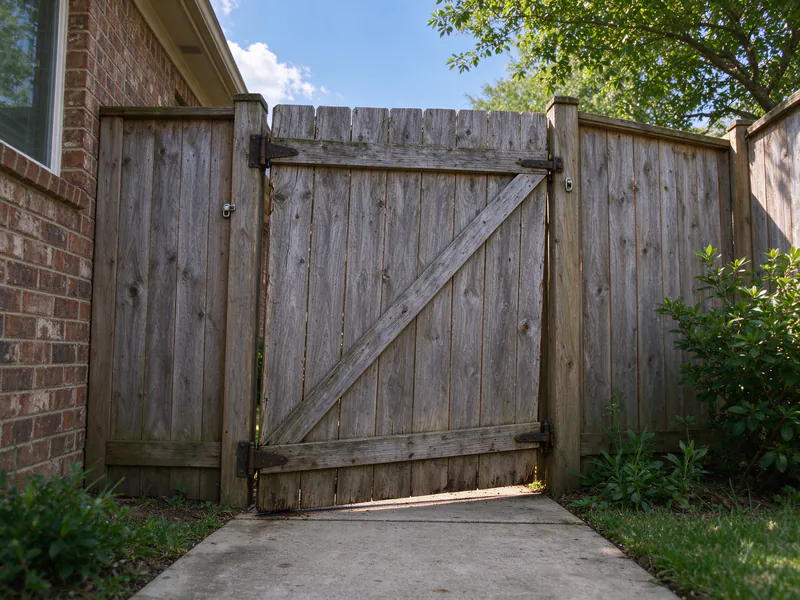
A gate is a lever. Its weight hangs off the hinge side, and every time it swings open it pulls the top of the hinge post toward the opening. On Allen’s Houston Black clay, a post footing that is loose after a dry summer lets that pull win, a little at a time, until the latch side drags on the ground or misses the keeper. A cedar gate built only from boards and a diagonal brace adds a second failure: as the wood dries and swells, the screws loosen and the frame racks out of square.
Those two causes point to different fixes, and a new hinge alone solves neither. The sagging gate guide walks through telling them apart on an existing gate.
Posts and frames that hold
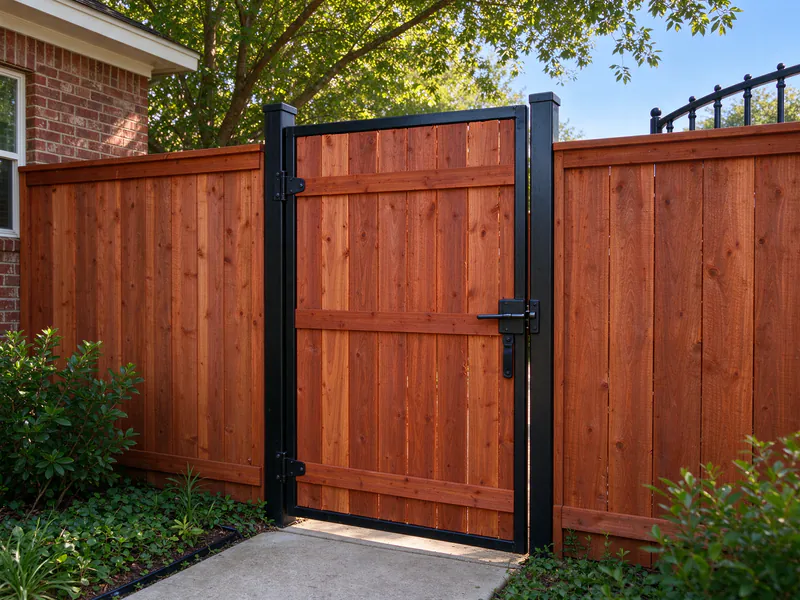
Allen requires metal posts on all fencing, so gate posts are steel. For a gate, they are a heavier section than the line posts and set deeper than the city’s 18-inch minimum, because the hinge post carries a sideways load the line posts never see. The hole is straight-sided so the clay cannot get a grip on a flared top, and the concrete is crowned to keep water off the steel. The clay soil guide explains why depth and hole shape matter more than the amount of concrete.
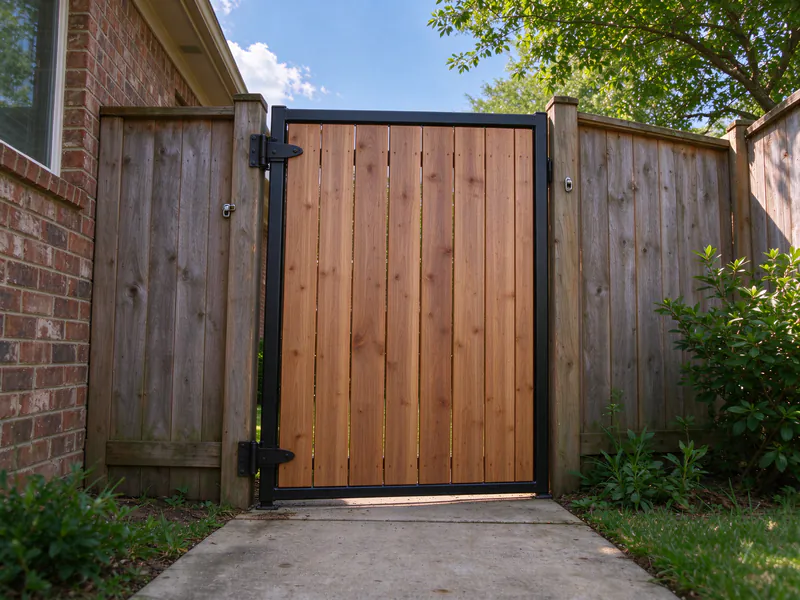
The gate itself is built on a welded steel frame, with cedar pickets fastened to the frame to match the fence. The frame does not rack as the wood moves, and it gives the hinges solid metal to bolt through. Hinges are sized to the gate’s weight; a pair rated for a light 4 ft gate will bend under a 6 ft double leaf.
Walk gates and side yards
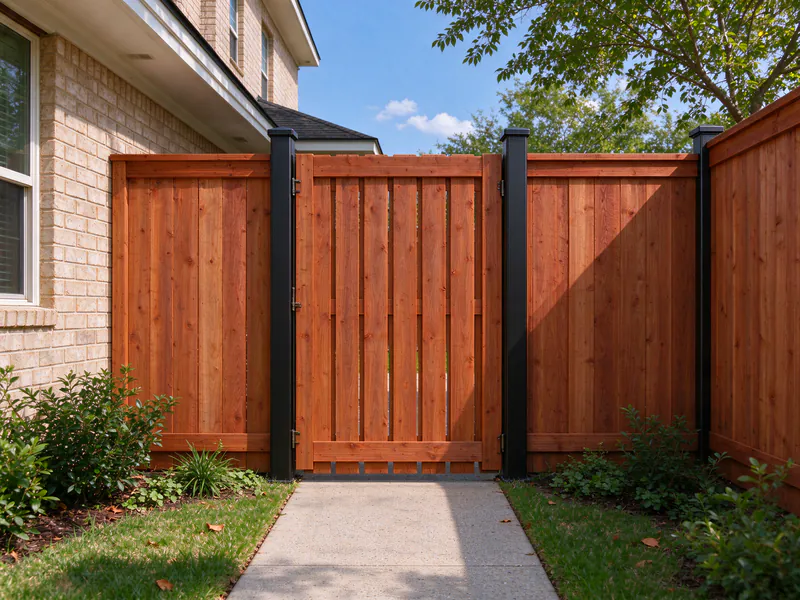
Most Allen backyards need at least one walk gate for trash bins, a mower and service access. Width comes from what must pass: measure the widest thing you will push through and allow clearance on each side. Swing direction matters on narrow side yards, where a gate opening outward can hit an AC unit or block the walk.
Where the gate falls inside the 3-ft drainage easement on a lot line, its bottom stays at least 3 inches above grade like the rest of the fence, which also keeps it from scraping on soil that heaves. On a slope, the gate is hung so it swings toward the low side, or the bottom is cut to clear the high side.
Double drive gates
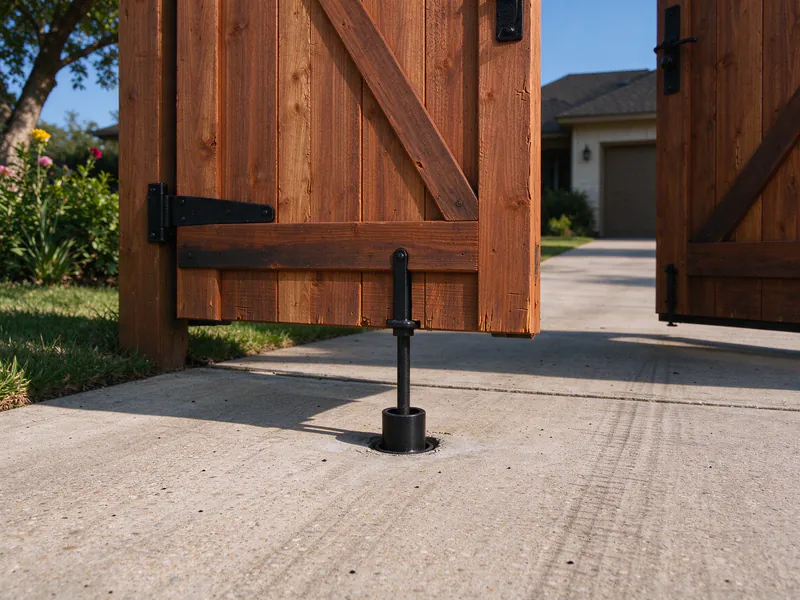
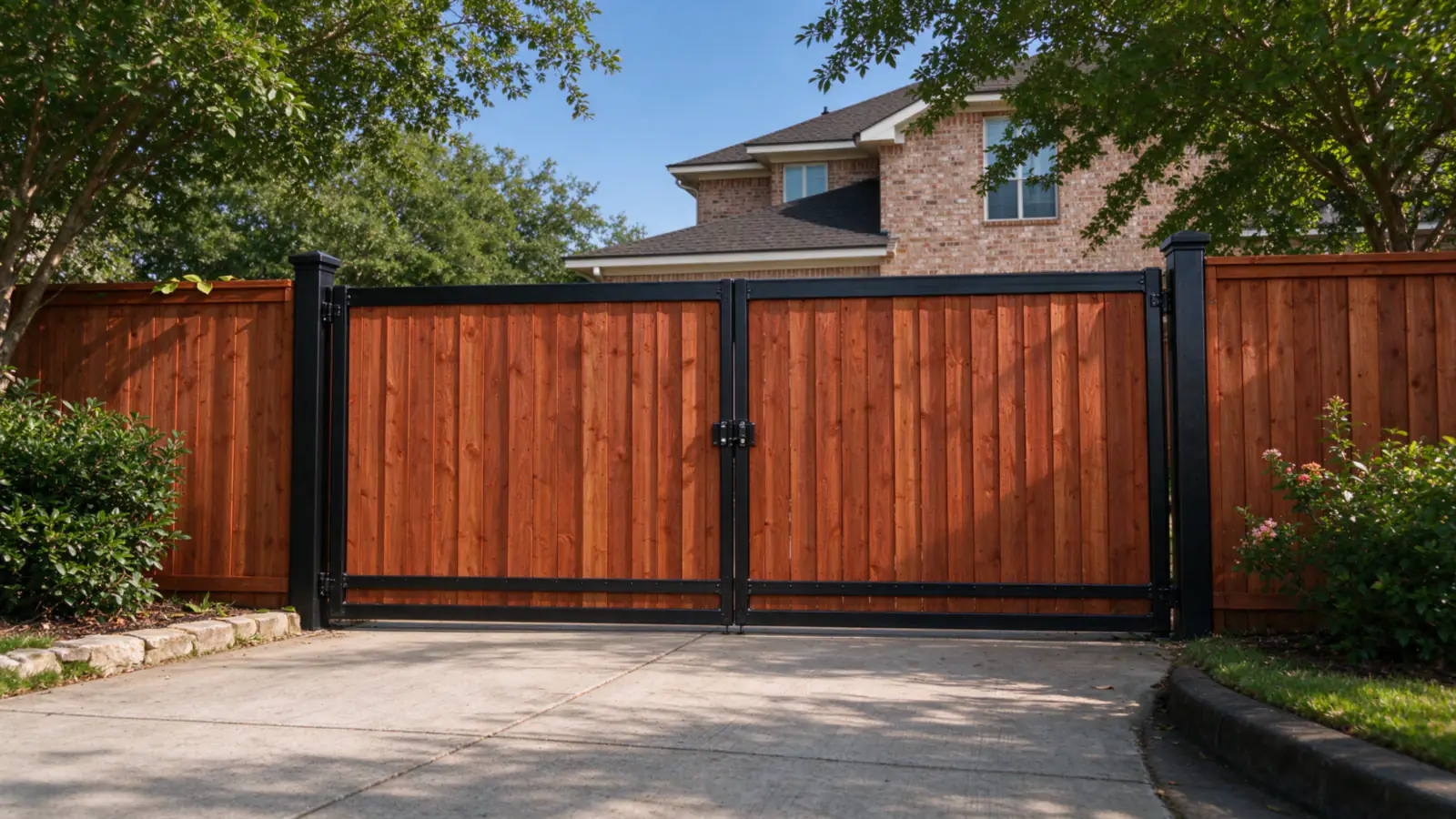
A double gate splits a wide opening into two leaves, each half the weight on its own hinge post. The leaf that stays closed most of the time is held by a drop rod into a sleeve in the ground, and a center stop keeps both leaves from swinging past closed. Typical DFW-area pricing runs $400 to $900 for a double drive gate, against $150 to $600 for a single walk gate, with height, frame and hardware moving the figure.
Wind is the other load. Allen’s building code designs for 105 mph gusts, and a solid 6 ft double gate is a large sail on two posts. That is part of why drive-gate hinge posts get the deepest footings on the job.
Replacing a gate in an existing fence
Plenty of gate jobs leave the fence alone. The old gate drags, the latch has been re-drilled three times, and the fence on either side is still sound. In that case the work centers on the opening: the hinge post comes out with its concrete, a heavier steel post goes in deeper, and a new steel-framed gate is built to the measured gap. On an older fence the latch-side post is checked too, because a latch only works if the post it closes against has not leaned the other way.
Sometimes the opening is the wrong size. Widening a side gate for a new mower or turning a walk gate into a double drive gate means moving a post and reworking a short run of fence, which is still far less than a full rebuild. If the fence around the gate is failing as well, fence repair covers resetting the posts nearby.
A gate added to an existing fence is part of the fence under Allen’s rules, so metal posts and hardware apply, and the Allen permit rules guide explains when the city needs an application. Where an HOA sets gate style or the side the frame faces, its approval comes first.
Alley gates and sliding gates
Many Allen homes back onto an alley with a rear-entry garage, and a gate across that drive is a common request. A swinging gate there needs a clear arc inside the yard and level ground. A sliding gate runs along the fence line instead; the swing vs sliding guide compares the two.
A sliding gate across an alley driveway has a specific City of Allen requirement: it must use one of two City trash-bin pickup layouts from the engineering standard details, and the permit application must name which one. That affects where the gate sits relative to the alley and where the bins go on pickup day. The 20-ft clear vision area at alley and street intersections also applies to gates near a corner.
Pool gates and powered gates
A gate in a pool enclosure must be self-closing and self-latching, with the latch on the pool side at least 4.5 ft above the ground, as part of Allen’s 4 ft minimum pool barrier. Spring hinges are set so the gate closes and latches from any open position; see pool fence installation.
Drive gates can be fitted with an opener later if the posts and frame are built for it. Typical DFW-area pricing for an automatic gate with opener runs $1,500 to $4,000. Openers and their entrapment protection under the UL 325 standard are covered on automatic gate installation and in the gate safety guide. Iron gates to match an ornamental steel fence are built the same way, on heavy posts with welded frames.