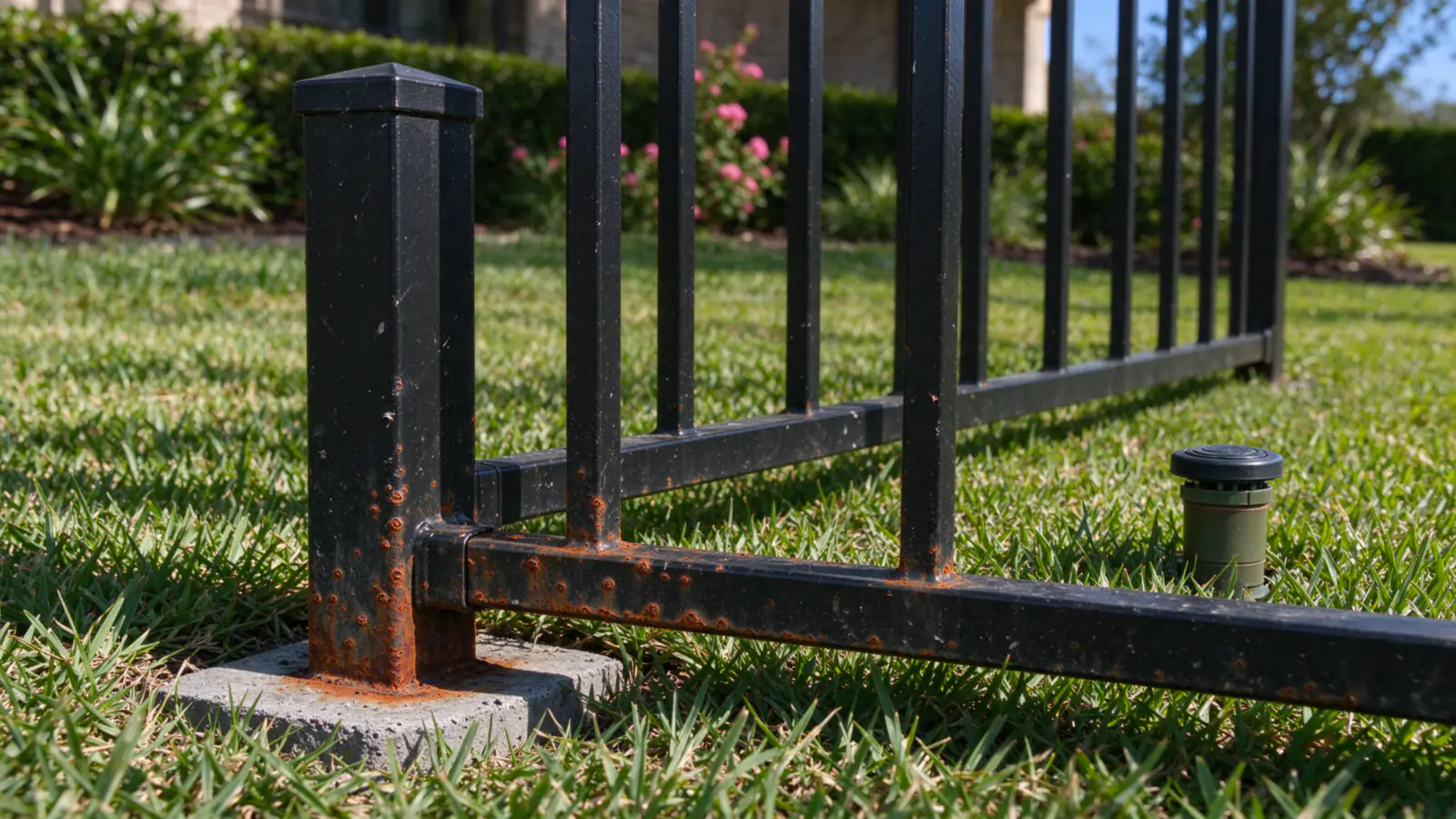
Garth Allen Fence Builders wrote this guide for Allen owners looking at rust on an iron or ornamental steel fence and wondering whether paint will fix it.
Surface rust on an iron fence can be wire-brushed, primed and repainted. Rust that has flaked metal away, holed a post at the ground or broken welds needs metal repair: cutting out and welding in new sections, or replacing the post or panel. Base rust usually means water is pooling at the footing.
Rust is not a single problem. Where it is and how deep it goes tell you which fix will last.
Surface rust or metal loss?
Tap and probe before deciding. A screwdriver or awl tells you more than a photo.
| What you find | What it means | Typical fix |
|---|---|---|
| Orange bloom, paint lifting, steel solid under it | Coating failure, little metal lost | Clean, prime, repaint |
| Rust scale that flakes off in layers | Metal is being consumed | Clean to firm metal; weld new steel where thin |
| Holes or soft spots in a post near grade | Post wall eaten through | Cut and splice the post base, or replace the post |
| Broken weld between picket and rail | Rust at the joint, or stress | Re-weld and repaint |
| Rail rusted through at a post bracket | Water trapped in the joint | Replace the rail section |
| Fence leans along a run | Footings moving or posts failing | Reset or replace posts |
Why posts rust at the base
Iron fences fail from the bottom up, and the cause is water that cannot leave.
The concrete collar. A post set in concrete that finishes flat, or below grade, makes a little cup around the steel. Rain and sprinkler water sit in it. A crowned collar that sheds water away from the post avoids this. Over time, cracks in the collar let water reach steel that was never meant to stay wet.
Clay soil. Houston Black clay holds water for days after rain, then shrinks away from the footing in summer, opening a gap that fills with the next storm. That cycling keeps the steel near grade damp much of the year and can crack collars as it moves.
Sprinklers and trimmers. A spray head aimed at the fence wets the same posts daily. String trimmers and mowers chip paint at exactly the height where water collects.
Open-top posts. A hollow post without a cap fills with rain from the top and rusts from inside, where nobody sees it until it breaks through. The City of Allen guideline calls for metal caps and hardware on fences, and on iron the cap is what keeps posts dry inside.
Repainting so it lasts
Paint over rust fails fast because rust keeps growing underneath. A lasting repaint follows this order:
- Remove loose material. Wire brush or grinder down to firm metal. Tight, thin rust can stay if the primer is rated for it.
- Clean. Wipe off dust and any oil; let the steel dry fully.
- Prime the same day. Bare steel starts to flash-rust within hours in humid weather. Use a rust-inhibiting metal primer on every bare spot.
- Two finish coats of exterior metal enamel, in dry weather and mild temperatures so the paint cures properly.
- Fix the water. Re-aim sprinklers, pull soil and mulch back from posts, and re-crown or seal cracked collars.
Allen’s adopted code rates weathering as Moderate, which suits a well-kept painted finish. The weak spots are the ones that stay wet, not the open air.
When metal repair or replacement makes sense
Posts rusted through at grade can sometimes be cut above the damage and spliced onto a new base set in fresh concrete. That works for a few posts. When most posts along a run are holed, or rails have separated in several places, replacing panels is usually simpler. A replacement run in Allen sits on metal posts at least 18 in deep in concrete, per the City guideline. Typical DFW-area cost for iron or ornamental steel is $28 to $55 a foot installed. See iron fence installation for panels and posts, fence repair for section work, and the repair or replace guide for the decision.
Pool fences and gates come first
If the rusted fence is a pool barrier, a stuck hinge or corroded latch is a safety issue. The City of Allen requires pool enclosures with self-closing, self-latching gates and the latch on the pool side at least 4.5 ft from the ground. If rust stops a gate swinging shut and latching on its own, repair the hardware before anything else. Pool fence installation covers the barrier rules, and gate installation covers hinges and latches. For powered iron gates, the automatic gate safety guide explains why rust and drift affect sensors too.
For galvanized steel on new work, the steel vs wood posts guide covers coatings, and the clay soil guide covers footings.