Garth Allen Fence Builders put this guide together because timing is where a lot of new-fence stain jobs go wrong. Cedar arrives with moisture in it, and stain applied too soon or too late gives a weaker finish than the same product applied at the right moment.
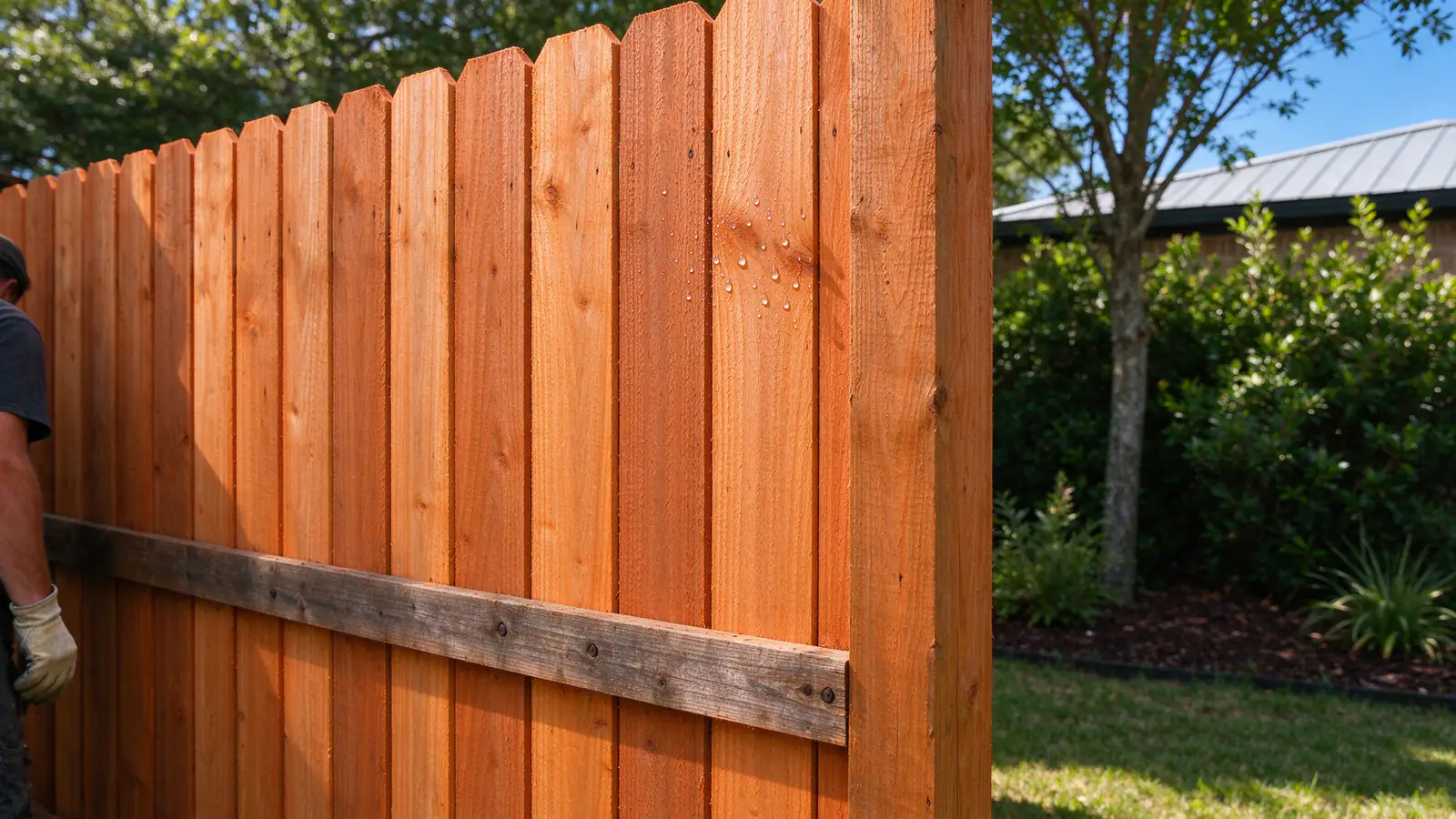
Stain a new cedar fence once the boards are dry enough to soak up water: sprinkle a few drops on several pickets, and if they absorb within a few minutes rather than beading, the wood is ready. In Allen’s heat that often comes within weeks in summer and takes longer in cool, wet months. Stain in the first season.
Why new cedar has to dry first
Fence pickets are often shipped and installed with a fair amount of water still in the wood. A penetrating stain works by soaking into the outer fibers, and wet fibers are already full. Stain brushed or sprayed on too early stays near the surface, dries unevenly, and wears off faster. Some freshly milled boards also have a smooth, slightly glazed face that sheds liquid until it weathers a little.
Drying is also when cedar moves most. As pickets lose moisture they narrow, and some cup or twist. Letting that first round of movement happen before staining means the stain goes onto boards that have mostly settled. The warping and splitting guide explains that movement in more detail.
The water-drop test
Calendars are a poor guide because drying speed depends on the season, the sun on each side of the fence, and how wet the lumber was on delivery. The water test reads the wood directly:
- Pick several pickets on different sides of the yard, including a shaded stretch.
- Sprinkle or flick a few drops of water on each.
- If the drops sit as beads, wait and test again in a week or so.
- If they darken the wood and soak in within a few minutes, that side is ready.
The sunny side of a fence often passes days or weeks before the shaded side. It is fine to stain the ready side first.
How Allen’s climate shapes the timing
Allen’s adopted building code rates weathering as “Moderate,” and summers here are hot and bright. That works both ways. Sun dries new cedar quickly, so in summer a fence can be ready to stain sooner than people expect. The same sun starts graying the surface quickly, so the window between “dry enough” and “already weathered” is shorter than in a cooler climate.
In winter and wet spring months, drying slows and the water test may keep failing for a while. That is normal. Waiting for the wood is better than staining on schedule.
Picking the day
- Dry wood and dry forecast. No rain the day before if possible, and none expected for a day or so after.
- Mild temperatures. Stain that dries too fast in direct summer sun can lap and streak. Early morning or late afternoon works better on hot days, and shaded sections can be done midday.
- Low wind. Sprayed stain drifts onto cars, siding and neighbors’ property.
- Sprinklers off. Turn off or redirect heads that hit the fence before and after staining.
Stain choices for new cedar
A penetrating, semi-transparent oil-based or water-based fence stain is the usual pick for cedar. It soaks in rather than forming a film, so it weathers gradually instead of peeling. Solid stains hide grain and color differences but behave more like paint. Clear sealers slow water absorption but do little against UV graying.
Many Allen HOAs specify stain colors, and the City’s fence guideline points owners to their HOA before the permit, so the color is often settled at the design stage. Check the approved list before buying stain.
Stain goes on the cedar only. The galvanized steel posts that Allen requires do not need it, and on board-on-board the posts are mostly hidden on the outside face anyway.
What stain does and does not do
Stain slows graying, reduces how fast boards take on and lose water, and keeps a fence looking even. It does not stop rot in a board that is already soft, and it does not fix a leaning post. Pickets near the ground last longer when they are not sitting in wet turf; along Allen’s lot-line drainage easement the fence bottom has to clear grade by 3 in anyway, which helps.
Plan on recoating as the color fades. How fast that happens depends on sun exposure and the product. The cedar lifespan guide and the seasonal checklist in fence care after a North Texas summer cover upkeep.
Cost
Typical DFW-area pricing for staining runs about $3.50 to $7 a foot for one side, depending on how much cleaning the boards need, the stain type and access. A brand-new fence usually needs little prep, which keeps it toward the lower end. More on budgeting is in the Allen fence cost guide, and the work itself is covered under fence staining. New fences are built under wood fence installation by insured fence contractors registered with the City of Allen.