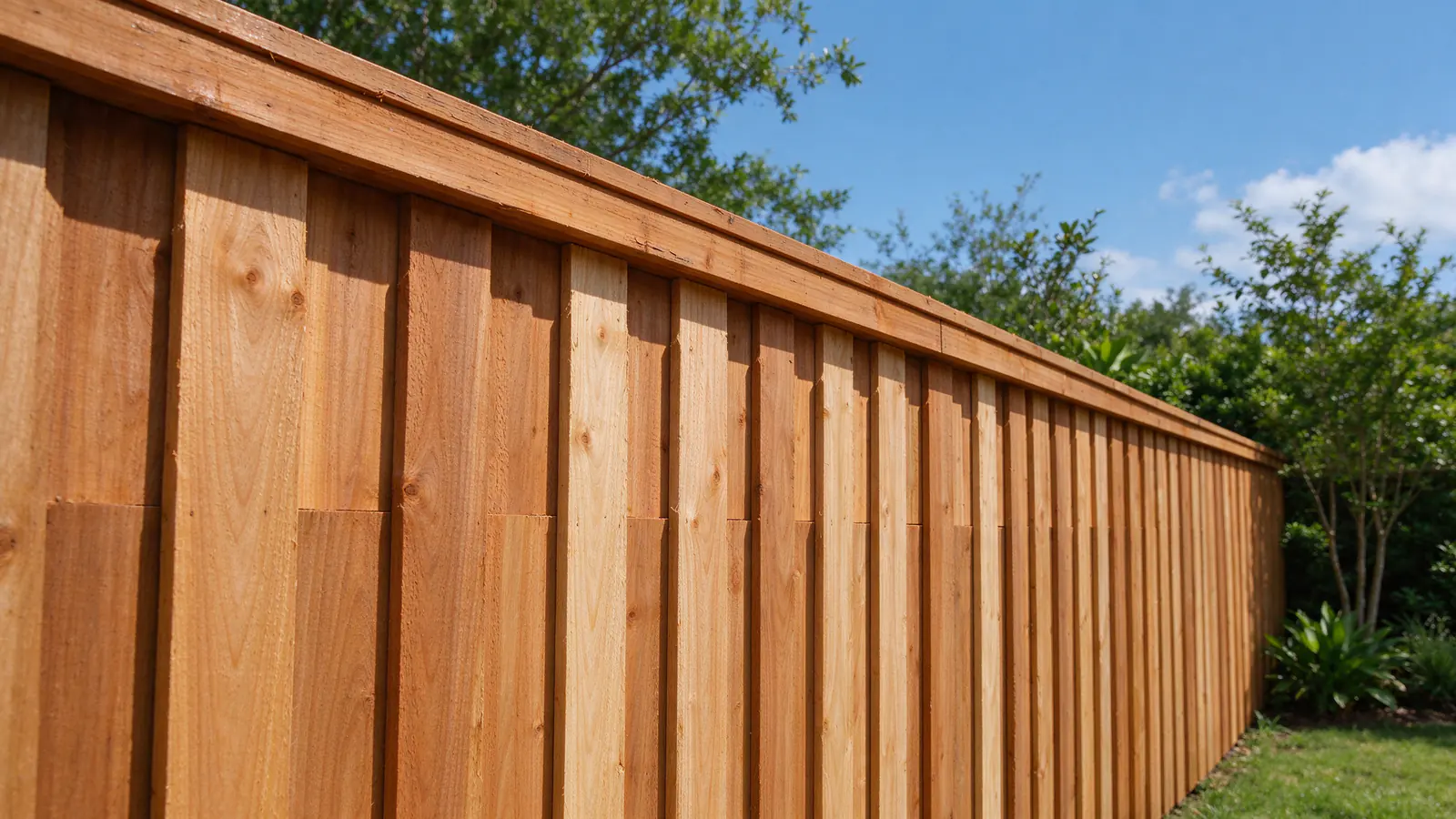
Garth Allen Fence Builders compares these two styles here because, on a cedar fence in Allen, the choice sets both the price per foot and how private the yard stays once the wood has dried.
Board-on-board overlaps a second row of pickets so no gaps open as cedar dries, and both faces look finished. Side-by-side butts pickets edge to edge, uses fewer pickets and costs less, typically $18 to $35 a foot in the DFW area against $35 to $50, but thin gaps appear as boards shrink.
How each style is built
Both styles start with the same frame: galvanized steel posts set in concrete, as the City of Allen requires, with two or three horizontal rails between them. The difference is in the pickets.
Side-by-side (sometimes called stockade or flat top privacy) puts a single layer of pickets on one face of the rails, each one tight against its neighbor. From the picket side the fence is a flat wall of boards; from the other side you see the rails and post brackets.
Board-on-board sets a first row of pickets with a gap between them, then a second row over the gaps so each picket overlaps the ones beside it by an inch or so. The rails and posts disappear behind the pickets, and the outside face has a layered, shadowed texture.
Shadow box splits those two rows across the rails, one row on each side. The fence looks finished from both faces, and air moves through the zigzag between layers.
Why cedar shrinkage decides the privacy question
Fence pickets leave the mill with moisture in them. Once installed in an Allen summer, they dry, and wood shrinks across its width far more than along its length. A side-by-side fence that had no visible gaps on installation day commonly shows thin lines of daylight within months. Nothing is wrong with the fence; that is just cedar adjusting to dry heat.
Board-on-board absorbs that movement. Because each picket overlaps its neighbors, a picket that narrows simply covers a little less of the board behind it. Privacy holds through wet and dry seasons. Shrinkage and the warping that sometimes comes with it are covered in the warping and splitting guide.
Cost per foot
| Style (6 ft cedar on steel posts) | Typical DFW-area range installed | Main cost driver |
|---|---|---|
| Side-by-side | $18–$35 / ft | One layer of pickets |
| Board-on-board | $35–$50 / ft | About a third more pickets, spacing labor |
| Board-on-board with top cap and trim | $45–$60 / ft | Cap rail and trim board added |
Shadow box generally prices close to board-on-board, since the picket count is similar. These are budgeting ranges, not quotes; the Allen fence cost guide shows how gates, tear-out and height add to them.
Wind, height and the Allen code
A solid privacy fence is a sail. Allen’s adopted building code uses a 105 mph design wind speed, and a fence that blocks all the air takes the full push of a storm gust. Board-on-board and side-by-side are both solid once side-by-side gaps are small, so their wind loads are similar. Shadow box lets some air through, which reduces the load but does not remove it.
That load matters most on 8 ft fences, which Allen allows in back and side yards. A taller solid fence needs deeper footings and closer attention to gate posts. The clay soil guide explains how depth is set on Allen’s shrink-swell ground.
Which face goes where
On a shared line, the neighbor sees one face and you see the other. Board-on-board and shadow box look finished from both, which avoids an awkward conversation or an HOA objection. With side-by-side, someone ends up looking at rails and brackets. Many Allen associations set rules on style, height and stain color, and the City asks owners to settle HOA approval before applying for the permit, as noted in the Allen permit rules guide.
The easement detail
Along the standard 3 ft lot-line drainage easement, Allen requires the bottom of the fence to clear finished grade by at least 3 in. Either style works with that rule: pickets are trimmed to stop above the soil rather than resting on a buried rot board. The gap also keeps picket ends out of wet turf, which helps the bottoms last.
How to choose
Pick board-on-board when privacy matters on a shared or street-facing line, when the HOA wants a finished face both ways, or when you plan to stain, since the layered face hides minor color differences. Pick side-by-side when budget leads and the fence faces open land or your own side yard. Consider shadow box for a windy, exposed run or when a neighbor wants some airflow.
All three are built under wood fence installation by insured fence contractors registered with the City of Allen. For finishing, see when to stain new cedar and fence staining.