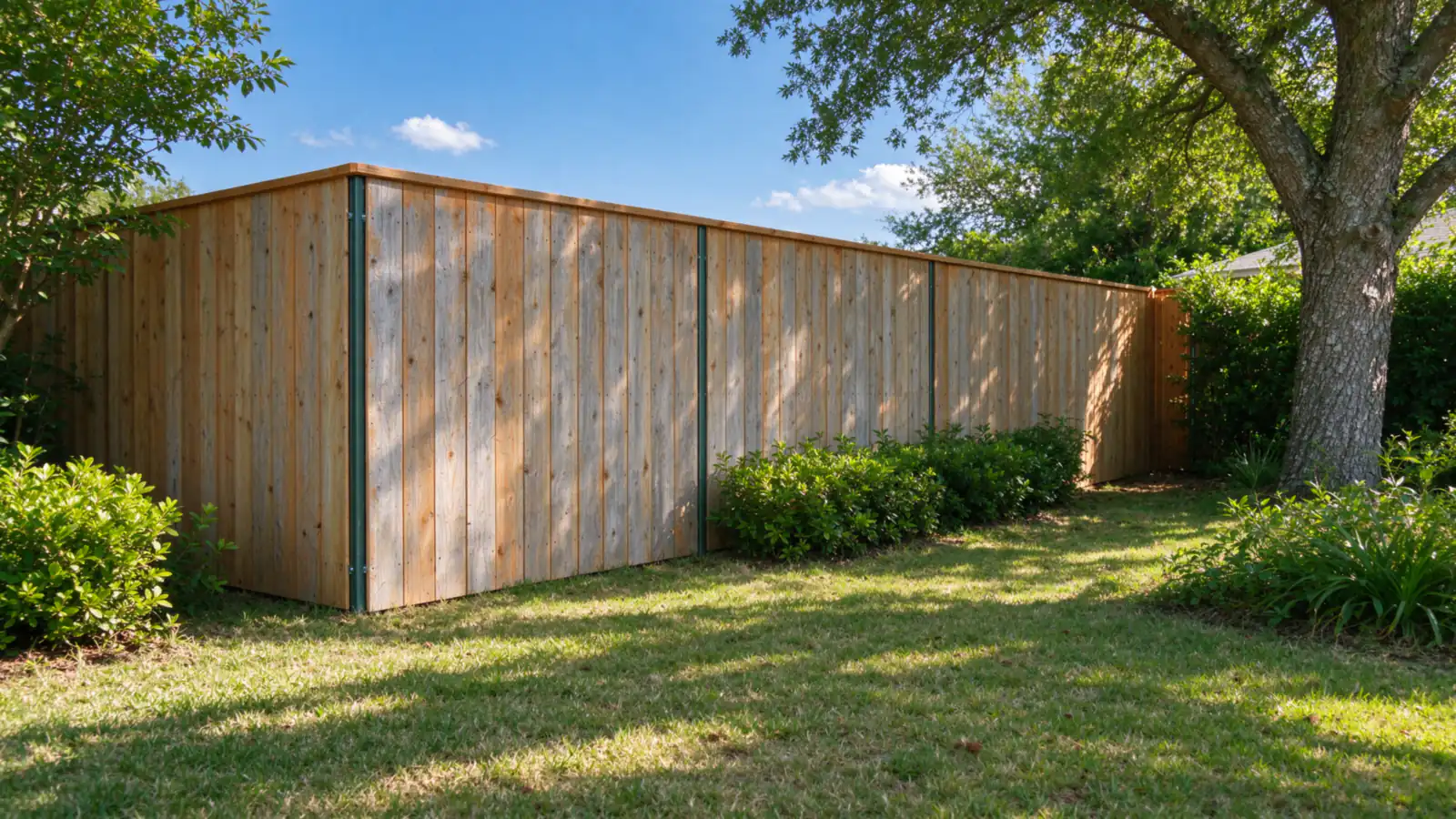
Garth Allen Fence Builders suggests a fall walk along every fence in Allen, because summer here does slow, quiet damage that only shows when the weather turns. Weeks of heat dry the clay under the footings, sun bakes the pickets, and termites stay busy in any wood that touches the ground.
After a North Texas summer, walk the fence and check four things: posts that lean or rock, gates that drag or miss the latch, boards that have cupped, split or lost their finish, and any wood touching soil or mulch. Catching these in fall keeps small repairs from turning into a section lost in a winter or spring storm.
Why summer is hard on Allen fences
Allen sits on Houston Black clay, which the USDA soil survey rates very high for shrink-swell. In a dry stretch the clay pulls away from concrete footings and opens cracks you can put a finger in. A post loaded by wind or a heavy gate can tip into that gap. Fall rain swells the clay again, but it does not push the post back to plumb, so each season can add a little lean. The clay soil guide explains why footing depth and shape matter here.
Heat and sun work on the wood itself. Cedar dries unevenly, so boards cup, twist and check, and screws or nails can back out as the wood moves. The City’s adopted code table rates termite risk in Allen as Very Heavy, and summer moisture from sprinklers keeps the ground line damp right where a picket or rot board sits.
A fall fence checklist
Posts. Push on each post at shoulder height. Steel posts do not rot, but check that rail brackets are tight and that the post has not rusted where it meets the concrete. On older fences with wood posts, look for soft wood at grade; that is usually the end of the post.
Gates. A gate that now drags or misses the latch usually means the hinge post moved, not that the gate warped. The sagging gate guide walks through how to tell.
Boards. Look for splits, cupped pickets and popped fasteners. A few bad boards are a routine fix; widespread warping has its own causes, covered in the warping and splitting guide.
The bottom edge. Pull back mulch and soil so no wood touches the ground. In the lot-line drainage easement, the City of Allen requires the bottom of the fence to stay 3 in above finished grade, so a bed that has crept up against the boards is also a code issue.
Finish. Sprinkle water on the boards. If it soaks in quickly instead of beading, the stain is spent.
Why fall, not spring
Spring in North Texas brings the strongest thunderstorm winds of the year, and the City’s code table puts Allen’s design wind at 105 mph. A post already loosened by a summer of dry clay, or a rail held by one rusted screw, is the piece that lets go first in a spring gust. Fixing it in October or November means the fence meets that season whole. If a storm has already done the damage, the storm-damaged fence guide covers what to check first.
Fixes worth doing before winter
Fall is a good window for fence staining: cooler days let the stain soak in rather than flash dry, and the fence goes into winter sealed. Tighten or replace loose brackets and fasteners, swap split pickets, and reset any gate hardware. A leaning post or a run of failing boards is a job for fence repair; a fence with many leaning posts along the whole line may be past patching, and the repair or replace guide helps decide. If you are replacing it, insured fence contractors registered with the City of Allen will build the new fence on the steel posts the City requires.