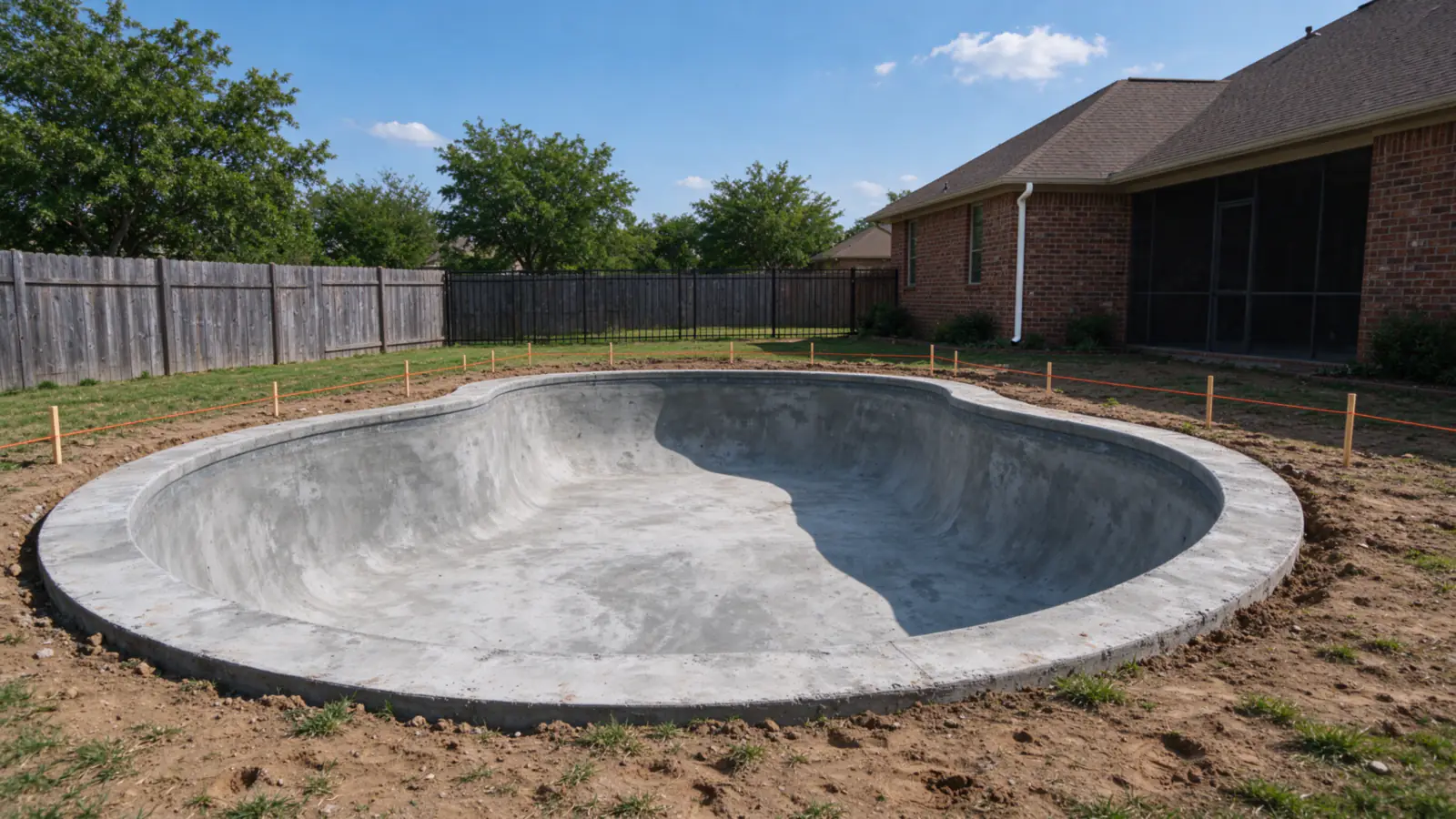
Garth Allen Fence Builders recommends treating the pool fence as part of the pool project from day one. Once water goes in, the backyard fence stops being a privacy screen and becomes a barrier the City of Allen inspects against specific rules, and those rules reach into gate hardware, latch height and even doors on the house.
In Allen, a pool must be fully surrounded by a fence or wall at least 4 ft high, with self-closing, self-latching gates and the latch on the pool side at least 4.5 ft above the ground. Doors opening into the pool area need UL 2017 alarms. Plan the fence with the pool layout, and confirm the details with the City before the design is final.
What the City of Allen requires
Two City documents apply. The Residential Fence Guideline says pool and hot tub enclosures must be at least 4 ft high with self-closing, self-latching gates, and the latch must sit on the pool side at least 4.5 ft from the ground. The Residential Swimming Pool and Spa Guideline adds that the pool must be completely surrounded and that doors opening into the pool area need alarms meeting UL 2017. The rest of the fence still follows the normal rules: metal posts, footings at least 18 in in concrete, the drainage-easement gap. The Allen permit rules guide lists them. Pool rules are code-sensitive and can be updated, so confirm them with the City for your address rather than assuming any fence will pass.
Timing the fence with pool construction
Pool builders usually need to bring an excavator and concrete trucks into the yard, often through a removed fence section or the alley side. Building the permanent fence before that work means tearing part of it out again. The usual approach is to keep or install temporary protection during construction, then build the final barrier once heavy equipment is gone and grading is done, so the 18 in footings go into settled ground rather than fresh fill. Pool decking also changes grade; setting posts after the deck is formed avoids a fence that ends up too short or too low at the bottom. The installation timeline guide covers permits and scheduling.
Gates are where most problems hide
Every gate in the enclosure has to close and latch by itself. A walk gate is straightforward with spring hinges and a magnetic or gravity latch mounted high on the pool side. Wide drive gates are harder: a double swing gate on an alley drive rarely self-closes reliably, and a sliding gate across the alley drive also has to follow one of the City’s two trash-bin layouts. Many owners solve this with a short inner fence that separates the pool from the drive, so the big gate is no longer part of the barrier. The swing vs sliding gates guide and gate installation cover the hardware side.
Choosing a material
Ornamental iron or steel is common around pools because it keeps the water visible from the house; it typically runs $28 to $55 a foot installed in the DFW area, plus $150 to $600 per walk gate. Picket spacing and horizontal rails matter, since a barrier should not offer an easy climb; check spacing with the City. Cedar on steel posts works where privacy matters more than sight lines. Vinyl and chain link need the Building Official’s approval in Allen. If a dog shares the yard, the best fence for dogs guide covers bottom gaps and dig-outs. For the full build, see pool fence installation or iron fence installation.