Garth Allen Fence Builders wrote this post because the City of Allen adopted the 2024 International Residential Code with local amendments, effective September 26, 2026, and the amended climate table inside it is the clearest public statement of what a fence here has to survive.
Allen’s amended Table R301.2 sets a 105 mph design wind (3-second gust, Exposure C), a 6 in frost line, termite risk rated Very Heavy and weathering rated Moderate. None of these is a fence rule by itself, but together they explain why Allen fences use steel posts, deep footings and careful wood detailing.
What the City actually adopted
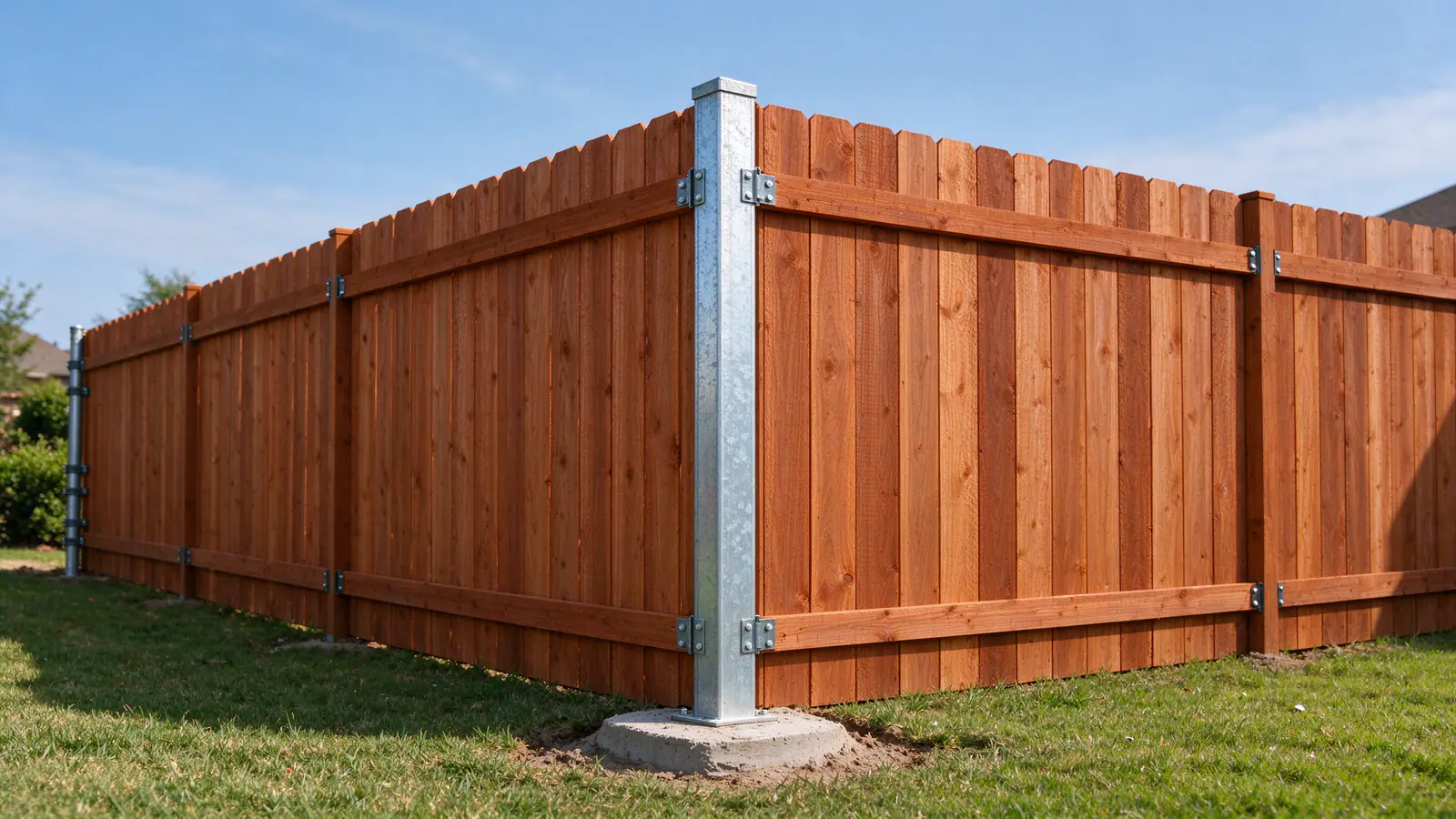
Every few years a city chooses which edition of the model building codes to enforce and writes amendments for local conditions. Allen’s ordinance adopting the 2024 codes includes an amended Table R301.2, the “climatic and geographic design criteria” table that designers use for houses. It is not a fence chapter. Fence requirements still live in the City of Allen Residential Fence Guideline: metal posts with metal caps and hardware, posts at least 18 in deep in concrete, 8 ft maximum in back and side yards, and the drainage-easement gap. The Allen permit rules guide lists those in one place.
So why read a house table when planning a fence? Because a fence sits in the same wind, soil and insects as the house, with far less mass holding it down.
105 mph wind: a solid fence is a sail
A 6 ft board-on-board fence presents a nearly solid face to the wind. At a 105 mph gust, that face pushes on every rail, and the rails pass the force to the posts, which pass it into the footing and the clay. The weak link decides the outcome: a bracket that pulls out, a post that bends at grade, or a shallow footing that rotates in wet soil. That is why a tall privacy run gets heavier steel at ends, corners and gates, and why footings often go past the 18 in minimum. Taller fences carry more load; an 8 ft section is a bigger sail than a 6 ft one. After a blow, the storm-damaged fence guide explains how to read what failed.
6 in frost: the clay is the real mover
A 6 in frost line tells you freezing is a minor force here. The ground movement that tilts Allen fences comes from Houston Black clay, which federal soil surveys rate very high for shrink-swell. It shrinks and cracks in a dry August and swells after autumn rain, rocking shallow footings a little more each cycle. The clay soil guide covers how footing depth and a crowned concrete top help.
Termites rated Very Heavy
The table rates termite risk in Allen as Very Heavy. Wood buried in or touching soil feeds them, and decay follows the same moisture path. This is one practical reason the City’s metal-post requirement makes sense: a galvanized steel post gives termites nothing to eat at the ground line, where wood posts in older fences usually failed first. The steel vs wood posts guide goes through the difference. Keeping pickets and rot boards off the dirt, and keeping mulch and soil from piling against them, matters for the same reason.
Weathering rated Moderate
The Moderate weathering rating reflects freeze-thaw exposure for masonry and concrete, and it fits what a cedar fence sees: hot sun and humidity swings more than hard freezes. Sun and moisture cycling gray and check cedar over time; a sealed or stained surface slows that. The cedar lifespan guide covers what sets the clock.
What to do with this
If you are building or replacing a fence, ask your installer how post size, spacing and footing depth account for the 105 mph wind and the clay, and how wood will be kept off the soil. Insured fence contractors registered with the City of Allen file the $75 permit and schedule the inspection. For the full build, see wood fence installation or fence replacement.